What is an FPV drone? FPV stands for first-person view. An FPV drone streams live video from a camera on the front of the aircraft to goggles or a screen, so you see exactly what the drone sees and fly as if you were sitting in the cockpit.
That immersive view is what makes FPV so different from a regular camera drone. This guide answers what is an FPV drone in plain terms, explains how the system works, what gear you need, how the flight modes differ, the Australian rules and the easiest way to get started.
What does FPV stand for?
FPV means first-person view. Instead of watching a drone from the ground, the pilot watches a live video feed from the drone’s point of view, usually through goggles.
So, what is an FPV drone in simple terms? It’s any drone built to be flown through that live feed. The term covers everything from tiny indoor “whoops” to racing quads, cinematic long-range rigs and ready-to-fly models like the DJI FPV.
How an FPV drone works
To understand what is an FPV drone, it helps to look at the parts that make up the system. Every FPV setup has the same core building blocks.
- The camera. A small camera on the front captures the live view. Some drones also carry a separate high-quality camera for recording.
- The video transmitter. It sends the live feed from the drone to your goggles.
- The goggles or screen. These display the feed in front of your eyes, blocking out distractions.
- The radio controller. You fly with two sticks that control throttle, yaw, pitch and roll.
- The flight controller. The drone’s onboard computer reads your stick inputs and keeps the motors balanced.
- The battery. FPV drones use high-output batteries that deliver bursts of power for speed and agility.
Analogue vs digital FPV
Older FPV systems use analogue video, which has very low delay but a grainy picture. Modern digital systems deliver a much sharper image with low latency. The DJI FPV system and Caddx digital units used on many of the drones in our range are digital, giving a clear view that makes learning easier.
What is an FPV drone used for?
Ask ten pilots what is an FPV drone for and you will get ten answers, because people fly FPV for very different reasons. Knowing what is an FPV drone used for helps you pick the right style of aircraft.
Freestyle
Freestyle pilots perform flips, rolls and dives around trees, buildings and terrain. It’s the most popular style and the source of most eye-catching FPV videos.
Racing
FPV racing sees pilots fly lightweight quads through gates on a course at very high speeds. Clubs run events around Australia.
Cinematic filming
FPV is now a staple of film, TV and real estate video. A skilled pilot can fly smooth, sweeping shots through spaces a regular drone can’t reach.
Cinewhoops and indoor flying
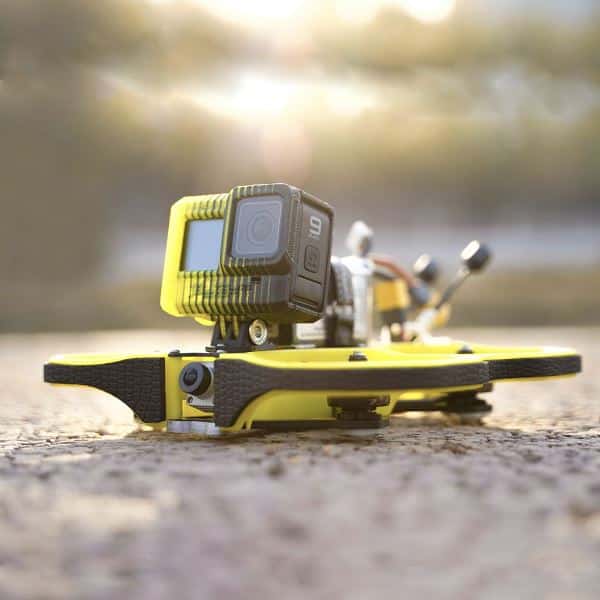
Small ducted drones called cinewhoops have guards around the props. They fly smoothly and safely close to people and objects, which is ideal for indoor tours.
Long range
Long-range FPV pilots fly efficient drones over landscapes. Australian rules still require visual line of sight, so long-range flying here is far more limited than videos from overseas suggest.
What is an FPV drone vs a regular camera drone?
| FPV drone | Regular camera drone | |
|---|---|---|
| How you see it | Live view through goggles | Watching the drone and a phone screen |
| Hovers by itself | Not in manual mode | Yes, using GPS |
| Speed and agility | Very high | Moderate |
| Learning curve | Steep | Gentle |
| Best for | Freestyle, racing, dynamic video | Photos, smooth video, mapping |
| Obstacle sensing | Usually none | Often included |
If you’re still deciding, our guide to the best drone for beginners explains why most new pilots start with a GPS camera drone before trying FPV.
Flight modes explained
Understanding flight modes is a big part of answering what is an FPV drone, because modes change how much the drone helps you.
| Mode | What it does | Who it suits |
|---|---|---|
| Normal or GPS mode | Holds position and limits speed | First flights and absolute beginners |
| Angle or self-level mode | Levels the drone when you let go, no flips | Learning FPV control |
| Sport mode | Faster, still with some assistance | Building confidence |
| Acro or manual mode | No self-levelling, full control | Freestyle, racing and cinematic flying |
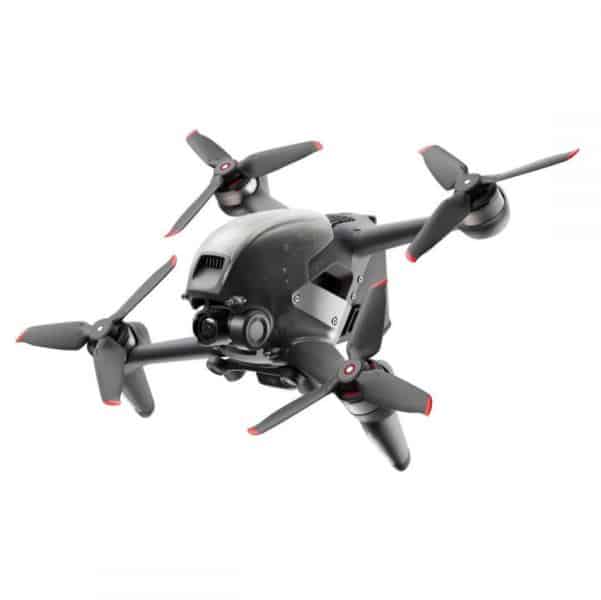
The DJI FPV is popular with newcomers because it offers Normal, Sport and Manual modes, plus an emergency brake that stops and hovers the drone at the press of a button.
The FPV gear you need
When people ask what is an FPV drone kit, they usually mean a full setup, which has a few parts. Some drones come as complete kits, while others are bind-and-fly (BNF), meaning you add your own controller and goggles.
Ready-to-fly kits
The DJI FPV Combo includes the drone, goggles and remote controller, so everything works together out of the box. It records 4K video and is one of the easiest ways to discover what is an FPV drone first-hand.
Goggles
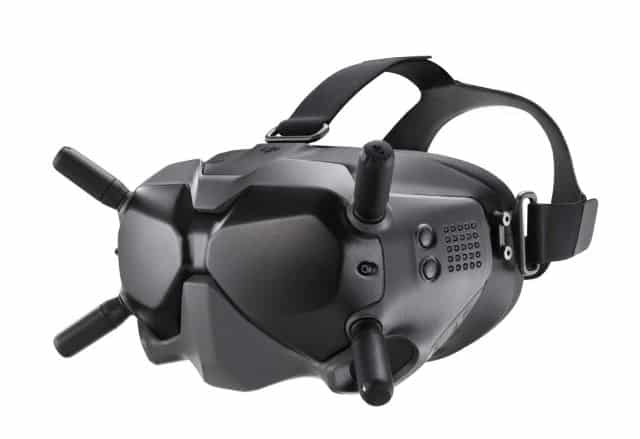
The goggles are your window into FPV. The DJI FPV Goggles V2 deliver a clear digital feed and are compatible with Caddx digital air units. Other options in our range include SwellPro FPV Goggles and a dual-use FPV screen and goggle.
Bind-and-fly drones
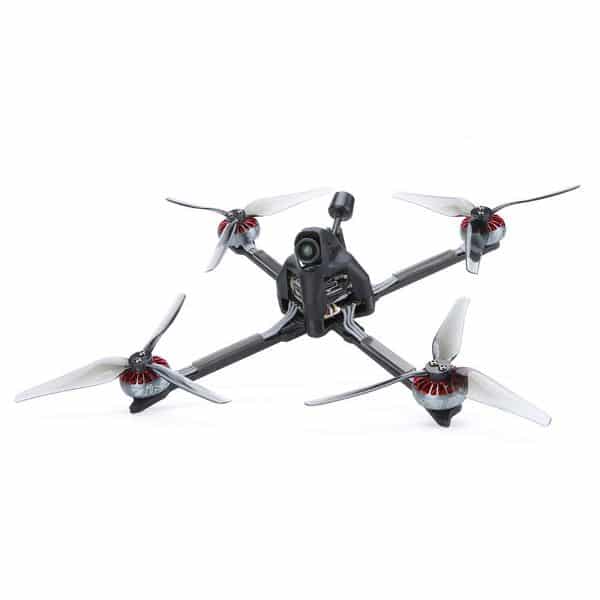
Bind-and-fly quads suit pilots who already own goggles and a radio, or want to build a custom setup. Our range includes the iFlight TP X5 HD, the iFlight ProTek35 CineWhoop, the iFlight Chimera5 LR HD and the iFlight Titan XL5.
Batteries and spares
FPV flights are short and intense, so most pilots carry several batteries. For the DJI FPV, the Fly More Kit adds batteries and a charging hub, and the DJI FPV Intelligent Flight Battery is sold separately.
Choosing your first FPV drone
| Drone | Type | Best for |
|---|---|---|
| DJI FPV Combo | Ready-to-fly kit | Beginners who want everything in one box |
| iFlight ProTek35 CineWhoop | Ducted cinewhoop | Smooth, close-up and indoor-style shots |
| iFlight TP X5 HD | 5-inch BNF | Freestyle once you have goggles and a radio |
| iFlight Chimera5 LR HD | Efficient 5-inch BNF | Cruising and scenic flights within sight |
| iFlight Titan XL5 | Tough 5-inch BNF | Experienced freestyle pilots |
What is an FPV drone made of? Frame sizes explained
FPV drones are usually described by the propeller size they carry, measured in inches. When people ask what is an FPV drone they should start with, frame size is often the first thing to understand.
| Size | Typical use | Notes |
|---|---|---|
| Tiny whoop (under 2-inch) | Indoor fun and practice | Very light, ducted props, gentle on furniture |
| 3 to 3.5-inch cinewhoop | Smooth video close to subjects | Prop guards, carries a small camera |
| 5-inch | Freestyle and racing | The most popular size, fast and agile |
| 7-inch and up | Efficient cruising | Longer flights, but still bound by line-of-sight rules here |
The iFlight ProTek35 is a 3.5-inch cinewhoop, while the TP X5 HD, Chimera5 LR HD and Titan XL5 are 5-inch class drones.
What is an FPV drone’s motor, prop and battery setup?
Under the frame, three parts decide how an FPV drone feels in the air.
- Motors. Brushless motors spin at high speed and respond instantly. Larger or higher-rated motors give more punch.
- Propellers. Prop size and pitch change how the drone grips the air. Pilots often swap props to fine-tune handling.
- Batteries. FPV batteries are rated by cell count, such as 4S or 6S. Higher voltage delivers more power, but it also demands more skill to control.
Understanding these parts makes it far easier to answer what is an FPV drone capable of, and why two drones that look similar can fly very differently.
A short history of FPV
The question of what is an FPV drone has a surprisingly recent answer. Hobbyists began strapping small analogue cameras and transmitters to model aircraft in the early 2000s, flying with basic video screens and early goggles.
As brushless motors, lithium batteries and flight controllers improved, small quadcopters became the platform of choice. Racing leagues and freestyle videos turned FPV into a global hobby, and digital video systems later made the view far clearer. Ready-to-fly kits like the DJI FPV then opened the hobby to people who didn’t want to build or solder their own drone.
Is an FPV drone right for you?
Before you buy, it’s worth asking honestly whether FPV suits you. Here’s how to tell.
FPV is a great fit if you:
- Love the idea of flying fast and freely, like a bird or a fighter pilot.
- Enjoy learning a skill over time and don’t mind practising on a simulator.
- Want dynamic, energetic footage for social media, sport or real estate.
- Like tinkering, tuning and upgrading your equipment.
A camera drone may suit you better if you:
- Mainly want photos, smooth landscape video or mapping.
- Prefer a drone that hovers by itself and returns home automatically.
- Want to fly without needing a spotter beside you.
If you’re unsure, there’s no harm in starting with a GPS camera drone and adding FPV later. Many pilots do both, using each where it shines.
What is an FPV drone like to fly for the first time?
Most people describe their first FPV flight as exhilarating and a little overwhelming. The goggles fill your vision, the drone responds instantly, and without self-levelling every small stick movement matters.
That’s why assisted modes and simulators are so valuable. They let you enjoy the feeling of first-person flight while you build the muscle memory for full manual control. Within a few sessions, most new pilots find their confidence grows quickly.
How to learn to fly FPV
Once you know what is an FPV drone and how it handles, the next step is learning to fly one. The fastest way is to practise in a safe environment before you risk a real drone.
- Start on a simulator. FPV simulators run on a computer with your radio controller plugged in. Crashes cost nothing, and you can practise for hours.
- Master hovering in angle mode. Learn smooth throttle control and gentle turns with the drone self-levelling.
- Fly simple lines and circles. Pick a large open field and practise slow, controlled laps.
- Move to acro mode on the simulator first. Get comfortable before trying it outdoors.
- Fly with a spotter. A friend watching the drone keeps you safe and legal.
- Join a club. Experienced pilots share tips, help with setup and know the best local fields.
Patience pays off. Most pilots spend weeks on a simulator before their first manual flight, and it shows in their confidence.
FPV drone rules in Australia
FPV is legal for recreational flying in Australia, but there’s an important extra step. Because goggles stop you seeing the drone directly, CASA requires a competent observer beside you who keeps the drone in sight and can warn you of hazards.
All the standard operating conditions still apply:
- Fly no higher than 120 m above ground level.
- Keep the drone within visual line of sight of you or your observer.
- Stay 30 m away from people and never fly over them.
- Fly only during the day and one drone at a time.
- Keep clear of airports, emergency operations and populous areas.
- Drones over 250 g must stay at least 5.5 km from controlled aerodromes.
Commercial FPV work, such as filming for clients, needs extra approvals. Check CASA’s drone rules for the latest requirements before you fly.
FPV safety essentials
Part of knowing what is an FPV drone is respecting its power: these drones are fast, so safety habits matter even more than with a camera drone.
- Always use a spotter who watches the drone, the sky and the surroundings.
- Arm the drone only when ready and keep hands, faces and pets away from props.
- Check your failsafe. Make sure the drone cuts throttle or returns safely if the signal is lost.
- Handle batteries with care. FPV batteries store a lot of energy. Charge them on a fireproof surface and never leave them unattended.
- Wear protection. Safety glasses are a good idea when working on a powered drone.
- Respect privacy. Avoid filming people or properties without permission.
How much does FPV cost?
The cost of FPV depends on whether you buy a complete kit or build up separate parts. A ready-to-fly kit bundles everything, while bind-and-fly drones are cheaper on their own but need goggles and a radio.
Budget for spare batteries, propellers and a charger, plus a simulator. These extras are what keep you flying, and they’re part of understanding what is an FPV drone going to cost you overall.
What is an FPV drone FAQ
What is an FPV drone in simple terms?
An FPV drone is a drone you fly through a live video feed from its onboard camera, usually viewed in goggles. You see what the drone sees, as if you were inside it.
Is FPV hard to learn?
FPV in manual mode is harder than flying a GPS camera drone, but simulators make learning far easier. Assisted kits like the DJI FPV Combo offer gentler modes to start with.
Do I need a licence to fly FPV in Australia?
Not for recreational flying, but you must follow CASA’s rules, including having an observer keep the drone in sight while you wear goggles. Commercial work needs extra approvals.
What does BNF mean?
BNF stands for bind-and-fly. A BNF drone comes without a controller or goggles, so you pair it with equipment you already own.
How long does an FPV battery last?
FPV flights are short, often just a few minutes for freestyle, because pilots use a lot of power. The DJI FPV is rated for up to around 20 minutes in gentle flight.
Can I record video with an FPV drone?
Yes. Many FPV drones record high-quality footage onboard, and some pilots mount an action camera for even better video. Our guide to the best action camera covers popular options.
What is an FPV drone best for beginners?
A ready-to-fly kit with assisted modes is the easiest start. The DJI FPV Combo includes everything you need, plus Normal mode and an emergency brake to help you learn safely.
What is an FPV drone simulator?
An FPV simulator is computer software that recreates FPV flight. You plug in a real radio controller and practise freestyle, racing or cinematic flying without risking a drone. It’s the single best investment for new pilots.
What is an FPV drone cinewhoop?
A cinewhoop is a small FPV drone with ducts around the propellers. The guards make it safer to fly close to people and objects, so cinewhoops are popular for smooth indoor and real estate footage.
What is an FPV drone top speed?
It varies widely. Racing and freestyle drones can be extremely fast, and DJI rates the DJI FPV at up to 140 km/h in Manual mode. Speed isn’t required to enjoy FPV, though, and most learning happens at gentle speeds.
Start your FPV journey at Drones Direct
So, what is an FPV drone? It’s the most immersive way to fly: a live view from the sky, full control and endless creative potential. Start on a simulator, learn with an assisted kit like the DJI FPV Combo, then explore bind-and-fly drones as your skills grow.
Browse our full FPV drones range, compare camera drones or visit the drone shop.