The best drone for beginners isn’t the one with the longest spec sheet. It’s the one that hovers steadily on its own, comes home when you lose your nerve, and produces footage good enough that you want to keep flying. Get that right and your first drone becomes a hobby, not a cupboard ornament.
This guide picks the best drone for beginners in Australia across six real situations, from the first camera drone to a beginner who wants room to grow. It also explains the features that matter for new pilots, the rules you need to know and a simple plan for your first week of flying.
What makes the best drone for beginners?
Beginners crash for predictable reasons: drifting into trees, losing orientation, flying too far or running out of battery. The best drone for beginners has features that guard against each of those mistakes.
- GPS and vision positioning. The drone holds its position when you let go of the sticks. This is the single biggest help for a new pilot.
- Automatic return-to-home. If the signal drops or the battery runs low, the drone flies back to where it took off.
- Obstacle sensing. Sensors that detect objects ahead, behind or below give you a safety net while your judgement develops.
- Beginner or limited flight modes. These cap speed, height and distance until you’re ready for more.
- Light weight. Drones under 250 g fall into the most relaxed rules and carry less energy in a crash.
- Good value spares. Spare propellers and batteries keep you flying after the inevitable bumps.
Price matters, but it isn’t the deciding factor. A slightly more capable drone with obstacle sensing can be cheaper in the long run than a basic model you crash and replace.
The 6 best drone for beginners picks at a glance
| Situation | Best drone for beginners | Why it stands out |
|---|---|---|
| Best overall first drone | DJI Mini 2 Fly More Combo | Easy, stable, 249 g and three batteries |
| Best camera for a beginner | DJI Mini 3 Pro | Larger sensor and obstacle sensing |
| Best non-DJI option | Autel EVO Nano Plus | Big sensor and three-way avoidance |
| Best step-up for keen learners | DJI Air 2S Fly More Combo | 1-inch sensor, still easy to fly |
| Best long flight time | Autel EVO Lite | Long rated flights and a capable camera |
| Best for learning to code | DJI Tello EDU Classroom Pack | Tiny, programmable and safe indoors |
1. Best overall: DJI Mini 2 Fly More Combo
For most people, the DJI Mini 2 Fly More Combo is the best drone for beginners. At 249 g it sits in the most relaxed weight class, holds its position firmly using GPS, and records sharp 4K/30fps video.
The combo includes three batteries and a charging hub, each rated for up to 31 minutes in ideal conditions. That means far more practice time per outing, which is exactly what a new pilot needs. If you’d rather start lean, the standalone DJI Mini 2 is also available.
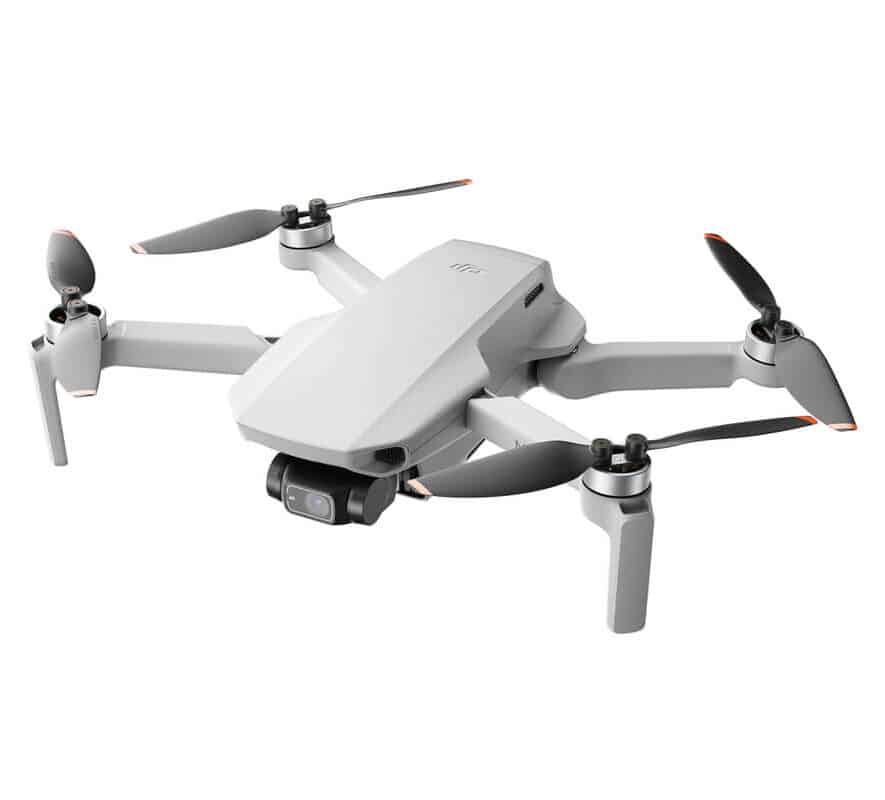
Why it’s great for beginners: stable hovering, simple app, reliable return-to-home and plenty of batteries.
Things to know: it has no obstacle sensing, so take extra care around trees and buildings.
2. Best camera: DJI Mini 3 Pro
If image quality is the priority, the DJI Mini 3 Pro is the best drone for beginners who want great footage from day one. Its 1/1.3-inch sensor handles sunrise and sunset far better than smaller sensors, and it shoots 4K at up to 60 fps.
Crucially for a new pilot, it adds tri-directional obstacle sensing, which helps prevent the classic beginner crash into a tree. True vertical shooting is a bonus for anyone creating social media content.
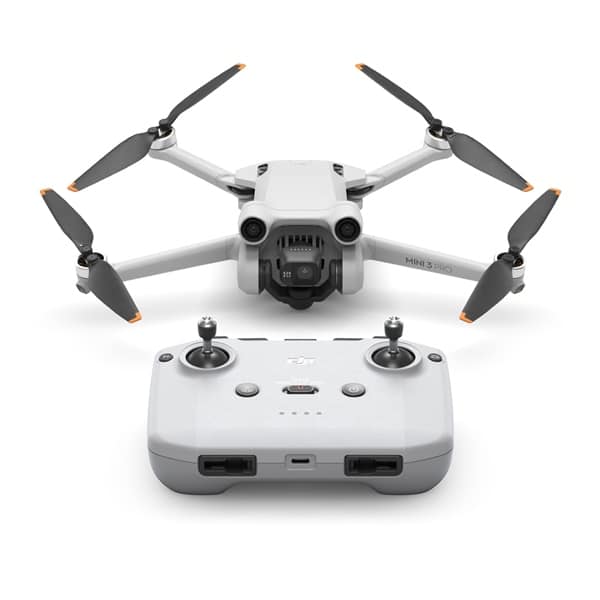
Why it’s great for beginners: obstacle sensing plus a camera you won’t outgrow quickly.
Things to know: it costs more than the Mini 2, and the optional Plus batteries take it over 250 g.
3. Best non-DJI option: Autel EVO Nano Plus
The Autel EVO Nano Plus is the best drone for beginners who want an alternative to DJI. It weighs 249 g, uses a large 1/1.28-inch sensor for strong low-light results and includes three-way obstacle avoidance.
It’s a polished, beginner-friendly package with a straightforward app. The Autel EVO Nano offers the same design with a smaller sensor if you want to save a little.
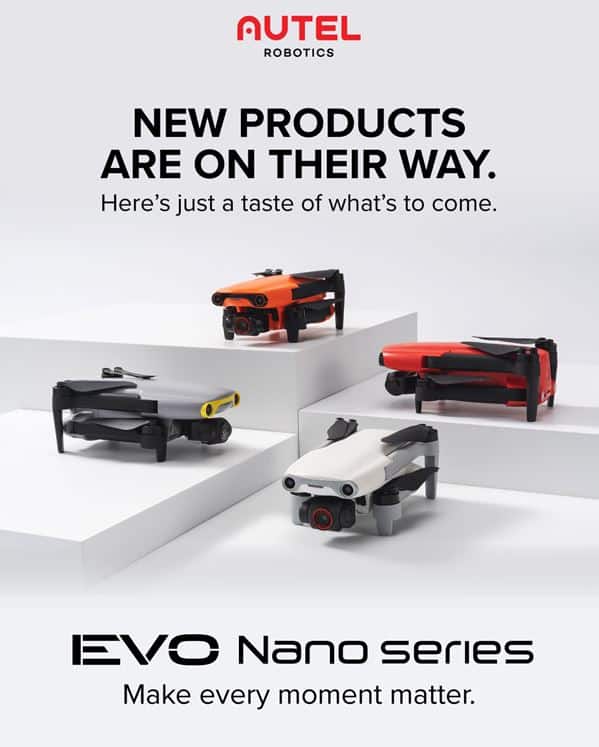
Why it’s great for beginners: obstacle avoidance, light weight and excellent low-light images.
Things to know: the accessory ecosystem is smaller than DJI’s.
4. Best step-up: DJI Air 2S Fly More Combo
Some beginners know they’ll get serious quickly. For them, the best drone for beginners might be the DJI Air 2S Fly More Combo. Its 1-inch sensor captures 20 MP photos and 5.4K video, a real jump in quality.
Despite the extra capability, the Air 2S remains easy to fly, with obstacle sensing and smart return-to-home. At around 595 g, it sits above the sub-250 g class, so it’s best for those who are confident they’ll fly regularly.
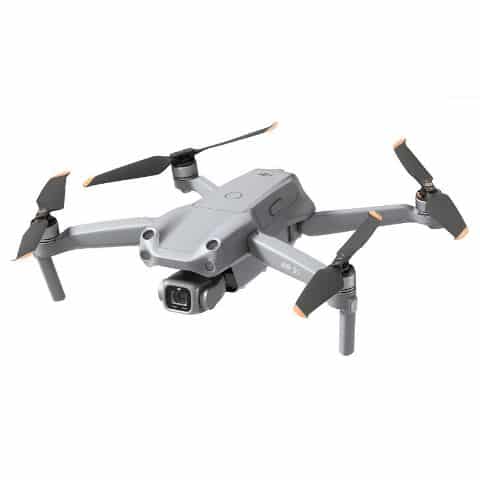
Why it’s great for beginners: professional-looking footage with forgiving flight assistance.
Things to know: heavier and more expensive, so it’s a bigger commitment.
5. Best long flight time: Autel EVO Lite
The Autel EVO Lite suits beginners who want long sessions without constant battery swaps. Autel rates it for up to around 40 minutes per battery, and its camera delivers detailed 4K footage.
Longer flights mean more time to practise each skill before returning home. It’s a strong choice for landscapes and travel where you want to cover more ground.
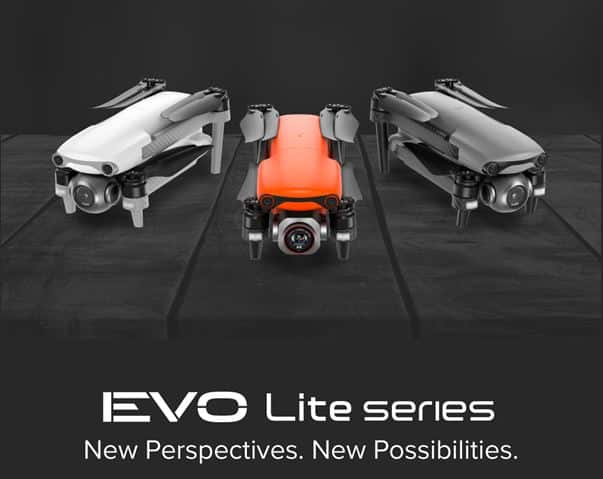
Why it’s great for beginners: generous flight time and a capable camera.
Things to know: it weighs more than the sub-250 g models above.
6. Best for learning to code: DJI Tello EDU
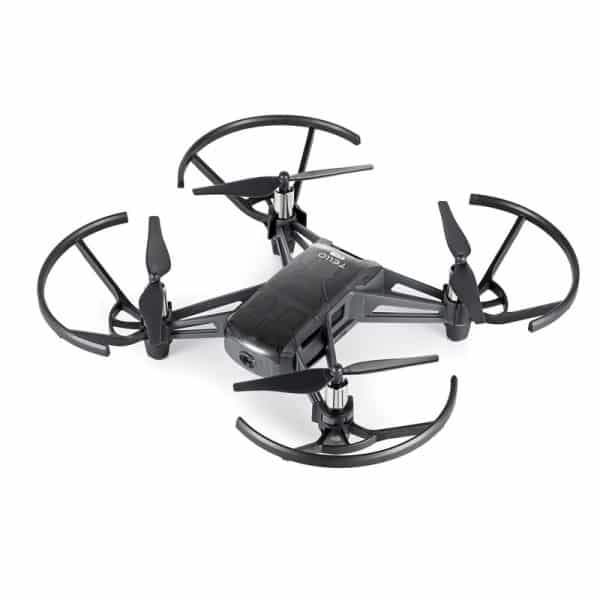
Not every beginner wants a camera drone. For students, classrooms and coding clubs, the Tello EDU is the best drone for beginners who want to learn programming as they fly. It weighs about 80 g and can be coded with Scratch, Python and Swift.
Our Tello Education Classroom Pack SET 1 bundles several drones for group lessons, and the CoDrone EDU is another excellent education choice. Our guide to choosing a drone for kids covers younger pilots in more detail.
Best drone for beginners comparison
| Model | Weight | Sensor | Max video | Obstacle sensing | Rated flight time |
|---|---|---|---|---|---|
| DJI Mini 2 | 249 g | 1/2.3-inch | 4K/30fps | No | Up to 31 min |
| DJI Mini 3 Pro | 249 g | 1/1.3-inch | 4K/60fps | Tri-directional | Up to 34 min |
| Autel EVO Nano Plus | 249 g | 1/1.28-inch | 4K | Three-way | Up to 28 min |
| DJI Air 2S | About 595 g | 1-inch | 5.4K | Yes | Up to 31 min |
| Autel EVO Lite | Over 250 g | Large sensor | 4K | Yes | Up to around 40 min |
Figures are manufacturer specifications measured in ideal conditions.
How to choose the best drone for beginners for you
Ask yourself four questions and the best drone for beginners for your needs usually becomes obvious.
- What will you film? Holiday clips and social posts suit a sub-250 g drone. Serious landscapes and client work favour a larger sensor.
- How often will you fly? Weekend fliers get more value from extra batteries than from a pricier camera.
- Where will you fly? Tight, tree-lined spaces make obstacle sensing worth paying for.
- Will you travel with it? If so, a folding sub-250 g model is the easiest to pack.
Still unsure? Our drone buying checklist walks through every box to tick before you pay, and our beginner’s guide to drones explains how they work.
Australian rules every beginner must know
Whatever you choose as your best drone for beginners, CASA’s standard operating conditions apply to recreational flying. Learn these before your first take-off.
- Fly at or below 120 m above ground level.
- Keep the drone within visual line of sight at all times.
- Stay at least 30 m from other people and never fly over them.
- Fly during the day only, and one drone at a time.
- Keep clear of emergency operations and populous areas such as busy beaches and events.
- Drones over 250 g must stay at least 5.5 km from controlled aerodromes.
Recreational pilots currently don’t need a licence or registration. If you ever fly for money, extra requirements apply. Check CASA’s drone safety rules for the latest details.
Your first week: a simple beginner flight plan
Even the best drone for beginners needs a pilot with a plan. Work through these sessions in a large, open space away from people.
- Day one: hover and land. Take off to head height, hold for ten seconds, then land. Repeat until it feels routine.
- Day two: straight lines. Fly forwards, backwards and sideways while keeping the drone facing away from you.
- Day three: turns. Rotate slowly and fly a gentle circle. Notice how left and right feel reversed when the drone faces you.
- Day four: return-to-home. Test it at a safe height in an open area so you know exactly what it does.
- Day five: first footage. Try a slow reveal or a smooth fly-forward. Smooth and slow beats fast and shaky.
- Day six and seven: build confidence. Practise orbits and figure eights, then review your footage and pick one thing to improve.
Camera drone or FPV drone: which is the best drone for beginners?
FPV (first-person view) drones are flown through goggles and can be thrilling, but they demand far more skill. Most FPV drones don’t hover on their own in manual mode, so every movement is up to you.
That’s why a GPS camera drone is almost always the best drone for beginners. Learn the basics on a stable camera drone first, then move to FPV once you’re confident.
| GPS camera drone | FPV drone | |
|---|---|---|
| Hovers by itself | Yes | Not in manual mode |
| Learning curve | Gentle | Steep |
| Main use | Photos and smooth video | Speed, freestyle and immersive footage |
| Flown with | Phone or screen controller | Goggles |
| Practice tip | Fly in an open park | Start on a simulator |
If you’re curious about FPV, the DJI FPV Combo includes assisted modes that make the jump easier. Browse more in our FPV drones range when you’re ready.
Best app settings for new pilots
Spending five minutes in the settings menu makes any beginner drone safer. Before your first flight, check these options.
- Beginner mode: if your drone offers one, switch it on. It limits speed, height and distance while you learn.
- Return-to-home height: set it higher than the tallest trees or buildings near where you fly.
- Low battery action: choose return-to-home rather than landing in place, so the drone comes back to you.
- Signal loss action: set it to return-to-home as well.
- Maximum height: keep it at or below 120 m to stay within the rules.
- Obstacle avoidance: if fitted, set it to brake or bypass rather than off.
- Gimbal and stick speed: lower values give smoother footage and gentler control.
These settings turn the best drone for beginners into an even more forgiving learning tool.
Where beginners can practise in Australia
Choosing a good spot is half the battle. The ideal practice area is wide open, free of people and away from airports.
- Large open parks and ovals outside busy times are often ideal, but check local council rules first.
- Private property with the owner’s permission gives you space and privacy.
- Model aircraft fields run by clubs offer a safe, structured place to learn and experienced pilots to ask.
- Avoid national parks unless you’ve confirmed drones are allowed, as many parks restrict them.
Use a CASA-verified drone safety app to check for airports, restricted areas and temporary no-fly zones before every session. Even the best drone for beginners can’t tell you where flying is permitted.
Looking after your first drone
Good habits keep the best drone for beginners flying well for years.
- Check propellers for chips or bends before every flight and replace damaged ones.
- Keep firmware and the app up to date.
- Store batteries at around half charge if you won’t fly for a week or more.
- Wipe off dust, sand and salt after coastal flights.
- Carry the drone in a case rather than loose in a bag.
Common beginner mistakes to avoid
- Launching without a GPS lock. Wait for the app to confirm the home point before taking off.
- Flying until the battery alarm. Start heading back with plenty in reserve, especially into wind.
- Reversing blind. Not every drone senses behind, so check the space before flying backwards.
- Forgetting the return height. Set return-to-home above the tallest trees nearby.
- Flying in strong wind. Light drones get pushed around. If it feels gusty, wait for a calmer day.
Accessories every beginner should get
A few extras make the best drone for beginners even easier to learn on. Spare batteries and propellers keep sessions going, a hard case protects your investment, and a landing pad keeps dust and grass out of the motors.
Browse cases and spares in our accessories and spares range. If you’re budget-conscious, our guide to best budget drones shows how to stretch your spend further.
Best drone for beginners FAQ
What is the best drone for beginners in Australia?
For most people, the DJI Mini 2 Fly More Combo is the best drone for beginners thanks to its stability, light weight and three batteries. If you want obstacle sensing and a better camera, choose the DJI Mini 3 Pro.
Should a beginner buy a cheap drone first?
A very cheap toy drone can teach basic stick control indoors, but it won’t prepare you for a GPS camera drone. Many beginners save money by starting with a stable, entry-level camera drone instead.
Do beginners need a licence to fly a drone?
Not for recreational flying in Australia. You must follow CASA’s safety rules, but no licence or registration is needed unless you fly for business.
Is a drone under 250 g better for beginners?
Usually, yes. A sub-250 g drone is lighter, falls under the most relaxed rules and is easier to travel with. That’s why most picks for the best drone for beginners weigh 249 g.
How long does it take to learn to fly a drone?
With GPS and return-to-home, most people can fly confidently within a few sessions. Smooth, cinematic flying takes longer, but regular short practice builds skill quickly.
Is obstacle sensing worth it for a beginner?
If you fly near trees, buildings or cliffs, yes. Obstacle sensing won’t prevent every crash, but it catches many of the most common beginner mistakes.
What is the best drone for beginners on a budget?
The DJI Mavic Mini and standalone DJI Mini 2 are the most affordable GPS camera drones in our range. Both weigh 249 g, hover steadily and return home automatically, which makes either a sensible best drone for beginners when money is tight.
Can beginners fly a drone in the wind?
Light wind is fine, but beginners should avoid gusty days. Small drones can be pushed sideways or struggle to fly back against a headwind. Check the forecast, watch the in-app wind warnings and land early if the drone works hard to hold position.
What should I practise first with a new drone?
Start with take-off, hovering and landing in a big open space. Once that feels easy, add straight lines, turns and a planned test of return-to-home. Mastering these basics first makes everything else simpler.
Find the best drone for beginners at Drones Direct
The best drone for beginners is stable, forgiving and fun enough to keep you flying. Start with the DJI Mini 2 Fly More Combo for value, choose the Mini 3 Pro or EVO Nano Plus for a better camera and obstacle sensing, or step up to the Air 2S if you’re sure you’ll fly often.
Compare every model in our camera drones range or browse the full drone shop.