Drone spraying is changing how Australian farmers protect crops, control weeds and manage pasture. A spray drone can treat paddocks too wet for a ground rig, reach steep or timbered country, and spot-spray weeds without driving over the whole block.
This guide explains how drone spraying works, where it makes sense, what drives the cost, and the CASA and state chemical licences you need before you start. It also covers the DJI Agras T10, the spray drone in the Drones Direct range, and the accessories that keep it working through a full day.
What is drone spraying?
Drone spraying uses a multirotor drone fitted with a liquid tank, pump and nozzles to apply agricultural chemicals from the air. The drone flies a planned route a few metres above the crop, and downwash from the rotors pushes the spray into the canopy.
Modern spray drones fly automatically along mapped routes, hold a set height above the ground using terrain-following radar, and adjust flow rate to match speed. The pilot supervises, refills the tank and swaps batteries between flights.
Drone spraying vs ground rigs vs aircraft
Each application method has strengths. Comparing them side by side shows where drone spraying fits on your farm.
| Spray drone | Ground boom spray | Fixed-wing or helicopter | |
|---|---|---|---|
| Wet paddocks | Excellent, no ground contact | Limited, risk of bogging | Excellent |
| Steep or timbered country | Excellent | Poor | Good, depending on obstacles |
| Large flat areas | Slower | Fast and efficient | Very fast |
| Spot spraying | Excellent | Limited | Poor |
| Crop damage | None from wheels | Wheel tracks | None |
| Who operates it | Farmer or contractor | Farmer or contractor | Specialist operator |
| Typical job size | Small to medium | Small to very large | Large |
The takeaway is simple: drone spraying is a precision tool. Use it where precision, access or timing matter most, and keep conventional methods for big, open areas.
Common uses by crop and land type
Drone spraying is used across a wide range of Australian farming systems.
- Pasture: weed control in paddocks, around troughs and along fence lines.
- Orchards and vineyards: targeted application along rows and on slopes.
- Broadacre crops: spot spraying weed patches, headlands and wet areas.
- Horticulture: small, high-value blocks where precision matters.
- Environmental weed control: blackberry, lantana and other weeds in gullies and creek lines that are hard to reach on foot.
- Firebreaks and fence lines: keeping strips clear of growth without driving equipment along them.
Where drone spraying makes sense
Drone spraying doesn’t replace every boom spray or crop duster, but it shines in specific situations.
- Wet paddocks. When soil is too soft for a tractor, a drone keeps the spray program on time without bogging or compaction.
- Steep, rough or timbered country. Hillsides, gullies and scattered trees are hard for ground rigs and planes, but simple for a drone.
- Small or irregular blocks. Odd-shaped paddocks, orchards, vineyards and headlands are easier to cover precisely.
- Spot spraying weeds. Treat infestations of weeds such as blackberry, serrated tussock or lantana without blanket spraying the whole area.
- Pasture and fence lines. Spray along creeks, fences and drainage lines that ground equipment struggles to reach.
- Reducing crop damage. No wheel tracks through standing crop means less yield loss.
For very large broadacre areas, ground rigs and fixed-wing aircraft still cover ground faster. Many farms use drone spraying alongside them, sending the drone where it does the best job.
How a spray drone works
Understanding the system helps you get better results from drone spraying.
- Mapping. You map the paddock boundary and obstacles, either by walking it with the controller, flying it, or importing a map.
- Planning. The software calculates the route, swath width, speed and flow rate for your target application volume.
- Spraying. The drone flies the route automatically, keeping a consistent height above the crop and pausing when the tank runs low.
- Refill and swap. The drone returns, you refill the tank and change the battery, and it resumes where it left off.
- Records. Flight logs record where and when you sprayed, which helps with chemical records and compliance.
The DJI Agras T10
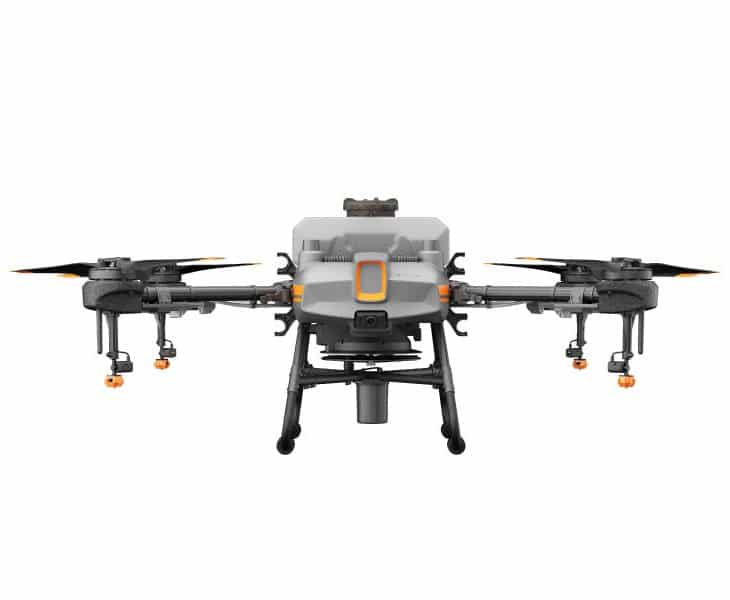
The DJI Agras T10 is a compact agricultural drone designed for small to medium farms and contract work. Its listing describes an 8 L spray tank, a spray width of up to 5 m and coverage of up to 15 acres per hour, with stable image transmission from up to 5 km away.
The compact folding design makes it easy to transport in a ute, and the controller has a bright 5.5-inch screen for clear viewing in the paddock.
Spreading as well as spraying
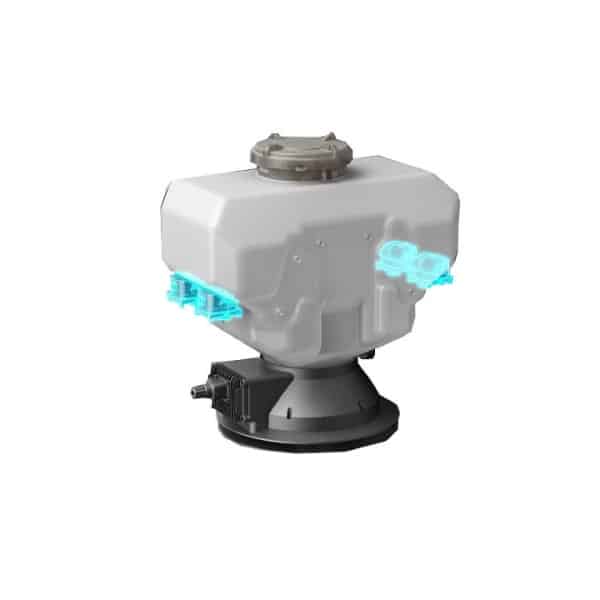
The Agras T10 Spreading System 3.0 converts the drone for spreading granules such as seed, fertiliser or feed. The listing says it carries 8 kg of granules and fits in about three minutes, so one drone can spray and spread across the season.
Batteries and charging
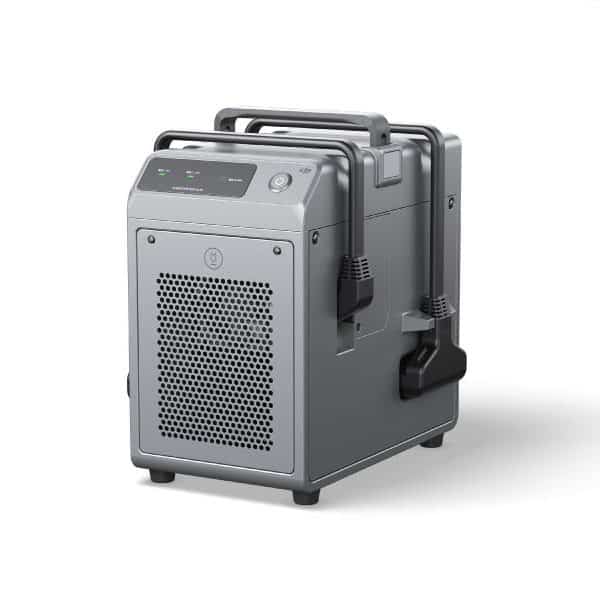
Spray drones work hard, so batteries are the key to productivity. Most operators rotate several Agras T10 batteries with an Agras T10 battery station so there’s always a charged pack ready. A generator or large portable power station is usually needed in the field.
What does drone spraying cost?
The cost of drone spraying depends on whether you hire a contractor or buy your own drone, and on the job itself. Rather than a single price, think about the factors that drive it.
| Cost factor | Why it matters |
|---|---|
| Area and shape | Small, irregular blocks take longer per hectare than large rectangles |
| Application volume | Higher water rates mean more refills and more flights |
| Terrain and obstacles | Trees, powerlines and slopes slow planning and flying |
| Distance to water and refill point | Longer trips between refills reduce productivity |
| Chemical cost | Usually the biggest cost, and the same whether applied by drone or ground rig |
| Licences and training | RePL, state chemical licences and accreditation take time and money |
| Equipment and batteries | Drone, batteries, chargers, generator and spares |
Hiring a contractor vs owning a drone
Hiring a licensed contractor suits farms with occasional spraying jobs. You avoid the equipment cost and licensing, and the contractor brings experience.
Owning a drone suits farms with regular spraying, spot-spraying programs or difficult terrain where timing matters. You control when you spray, but you take on the purchase, training, licensing and maintenance.
Drone spraying rules in Australia
Drone spraying sits under two layers of rules: CASA rules for flying the drone, and state or territory rules for applying chemicals from the air. You must meet both.
CASA rules for spray drones
CASA has categories that depend on the drone’s weight and whether you’re paid.
- Over your own land, unpaid, under 25 kg: generally requires drone registration and an RPA operator accreditation, and you must follow the standard operating conditions.
- Over your own land, unpaid, 25 kg to 150 kg: generally requires a remote pilot licence (RePL) and record keeping.
- Contract spraying for payment: generally requires a RePL and a remote operator’s certificate (ReOC), or flying under an organisation that holds one.
Check CASA’s drone rules and the specific requirements for your aircraft and operation before you fly.
State chemical licences
Each state and territory regulates aerial application of chemicals, and drone spraying counts as aerial application. Requirements differ, and in some states owning the land doesn’t exempt you.
- Queensland requires a pilot chemical rating licence for drone spraying, and a RePL is needed to obtain it, even over your own land.
- Victoria requires a pilot (chemical rating) licence for the pilot and an agricultural aircraft operator licence for the operator. Agriculture Victoria explains the requirements in detail.
- Other states have their own chemical handling, accreditation and aerial application rules.
Always check your state’s agriculture department before you start drone spraying.
Chemical labels
The chemical label is a legal document. Only use products and rates that the label or an APVMA permit allows for aerial application, and follow its directions on buffer zones, droplet size, weather conditions and withholding periods.
Getting good results from drone spraying
Good coverage depends on setup and conditions as much as the drone.
- Check the weather. Spray in suitable wind, avoid inversions and watch temperature and humidity to manage drift.
- Calibrate. Check nozzle output and flow regularly so the applied rate matches your plan.
- Choose the right height and speed. Lower and slower usually improves canopy penetration, within the label’s directions.
- Use the right nozzles and droplet size. Coarser droplets reduce drift, while finer droplets improve coverage.
- Mind your buffers. Keep the required distance from sensitive areas, waterways, neighbours’ crops and homes.
- Keep records. Record the date, time, product, rate, weather and area treated for every job.
Managing spray drift
Drift wastes chemical, harms neighbouring crops and can breach your licence conditions. Good drone spraying practice keeps product on target.
- Read the label first. Follow every instruction on wind speed, droplet size, buffers and conditions.
- Check the wind. Where a label doesn’t specify limits, Agriculture Victoria’s licence conditions, for example, require wind speeds between 3 and 13 km/h at the time and place of application.
- Avoid surface temperature inversions. Calm, clear mornings and evenings can trap fine droplets and carry them long distances.
- Use coarser droplets near sensitive areas. Adjust nozzles or settings to reduce fine droplets.
- Fly at the right height. Too high increases drift. Follow the label and manufacturer guidance.
- Stop if conditions change. If the wind picks up or swings towards a sensitive area, pause the job.
Setting up your own drone spraying operation
If you plan to spray your own land or start a contracting business, a structured approach saves time and avoids compliance problems.
- Check the rules for your state. Confirm the CASA category and the state chemical licences you need before you buy.
- Get trained. Complete the required pilot training, such as a RePL, and any chemical accreditation for your state.
- Choose the right drone. Match tank size, spray width and spreading options to your typical jobs.
- Plan your power. Budget for batteries, a battery station and a generator or portable power for the field.
- Set up a mixing and loading area. A safe, bunded area for mixing chemicals reduces spills and contamination.
- Create record templates. Make it easy to record every job for compliance and traceability.
- Start small. Begin with simple paddocks and build experience before taking on complex terrain.
Questions to ask a drone spraying contractor
If you decide to hire rather than buy, choose your contractor carefully. These questions help you compare operators.
- Do you hold a RePL, a ReOC and the chemical licences required in this state?
- What insurance do you carry, including public liability and chemical drift cover?
- Which drone and nozzles will you use, and what application volume do you recommend?
- How do you manage drift, buffers and sensitive areas near my property?
- Will you provide records of every job, including weather and product details?
- How quickly can you respond when a spray window opens?
A reputable contractor will answer these questions clearly and provide documentation on request.
Pairing spraying with crop monitoring
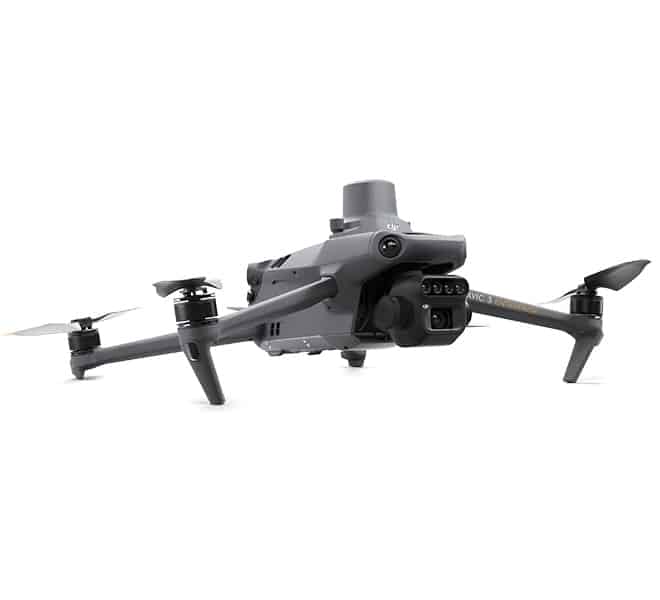
Many farms combine drone spraying with mapping. A multispectral drone such as the DJI Mavic 3 Multispectral can map crop health, highlight problem areas and help create targeted spray plans.
That means you can spray only where needed, saving chemical, time and money. Explore more aircraft in our enterprise drones range.
Planning a drone spraying season
Timing is everything in crop protection, and a drone’s biggest advantage is flexibility. Planning the season helps you make the most of it.
- Pre-season: service the drone, replace worn nozzles and hoses, check batteries and update firmware and maps.
- Early season: map paddocks, obstacles and buffer zones so jobs can start quickly when conditions are right.
- Peak season: keep spare parts and batteries on hand, and schedule work around the best weather windows.
- Wet spells: use the drone for paddocks the ground rig can’t reach, keeping your program on schedule.
- Post-season: review records, note what worked, and plan upgrades or extra batteries for next year.
Cleaning and maintenance
Chemical residue can damage pumps, seals and nozzles and contaminate the next job. Regular cleaning protects your investment and your crops.
- Rinse the tank, lines and nozzles with clean water after every job, and use a tank cleaner where the label recommends it.
- Remove and clean nozzle filters and strainers.
- Wipe down the frame, arms and motors to remove residue and dust.
- Inspect propellers for chips or cracks and replace damaged ones.
- Store batteries at the recommended storage charge in a cool, dry place.
- Keep a maintenance log alongside your spray records.
A well-maintained drone delivers more accurate application, fewer breakdowns and a longer working life.
Safety and best practice
Spray drones are large, powerful aircraft carrying chemicals. Safety must be part of every job.
- Wear the protective equipment the chemical label requires when mixing and loading.
- Keep bystanders, livestock and pets well clear of the work area.
- Inspect props, arms, nozzles and hoses before each day’s work.
- Map powerlines, trees and structures before flying, and set safe margins.
- Handle and charge batteries carefully, following the manufacturer’s guidance.
- Clean the tank and spray system thoroughly after each job.
Drone spraying FAQ
Is drone spraying legal in Australia?
Yes, but you need the right approvals. Drone spraying requires compliance with CASA rules for the drone and your state’s rules for aerial chemical application, which often include a chemical rating licence.
Do I need a licence to spray my own farm with a drone?
It depends on your state and the drone’s weight. CASA’s own-land rules may not require a RePL for smaller drones, but some states, such as Queensland and Victoria, require chemical licences regardless of land ownership.
How much can a spray drone cover?
It depends on the drone, application rate and conditions. The DJI Agras T10 listing describes coverage of up to 15 acres per hour with an 8 L tank.
Can drones spread fertiliser and seed?
Yes. With the Agras T10 Spreading System 3.0, the drone can spread granules such as seed, fertiliser and feed.
Is drone spraying cheaper than a ground rig?
Not always. Drone spraying is often most cost-effective in wet paddocks, rough terrain, small blocks and spot spraying. For large, flat paddocks, ground rigs are usually faster.
What chemicals can be applied with drone spraying?
Only products whose label or an APVMA permit allows aerial application should be used, and you must follow the label’s directions. Check each product carefully before including it in a drone spraying program.
How long does a spray drone battery last?
Spray drone flights are short because the aircraft carries a heavy liquid load. Operators typically swap batteries at each refill, which is why most run several batteries and a charging station.
Can I use a spray drone near my neighbour’s property?
Yes, if you follow the label’s buffer requirements and your state’s rules, and manage drift carefully. Some states also have chemical control areas that restrict certain products near sensitive crops.
Start drone spraying with Drones Direct
Drone spraying gives farmers precise, flexible control over crop protection and weed management, especially where ground rigs struggle. With the right licences, planning and equipment, it can save time, reduce crop damage and target chemicals where they’re needed.
Explore the DJI Agras T10 range, browse enterprise drones for mapping, or contact the team through the drone shop for help choosing.