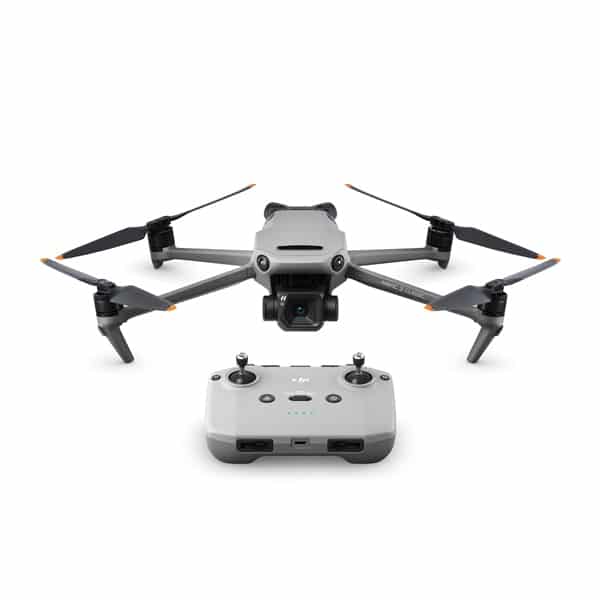
DJI is one of the best-known names in camera drones, and its range stretches from pocket-sized Minis to crop sprayers and cargo lifters. This guide explains who the company is, what each product family is built to do and the flight technology they share. We also cover DJI Care Refresh, the basic rules for flying in Australia and which DJI products you can buy from Drones Direct.
Who DJI is
DJI is a technology company headquartered in Shenzhen, China. According to its company profile, it grew from a single small office in 2006 and makes flying and camera stabilisation systems. Its early products were flight controllers and gimbals for other people’s aircraft. Ready-to-fly camera drones such as the Phantom came later and turned the brand into a household name.
That background explains why so much of the range shares the same building blocks. Stabilised gimbals, satellite positioning and a dedicated video link run through almost every aircraft, from a sub-250 g Mini to an enterprise Matrice. Learning one model gives you a head start on the next, which makes moving up the range easier.
The company’s products are now used well beyond hobby flying. DJI lists filmmaking, agriculture, conservation, search and rescue and energy infrastructure among the fields that rely on its gear. That spread is why this guide covers farm and cargo aircraft as well as the folding camera drones most buyers start with.
Camera drones: Mini, Air and Mavic
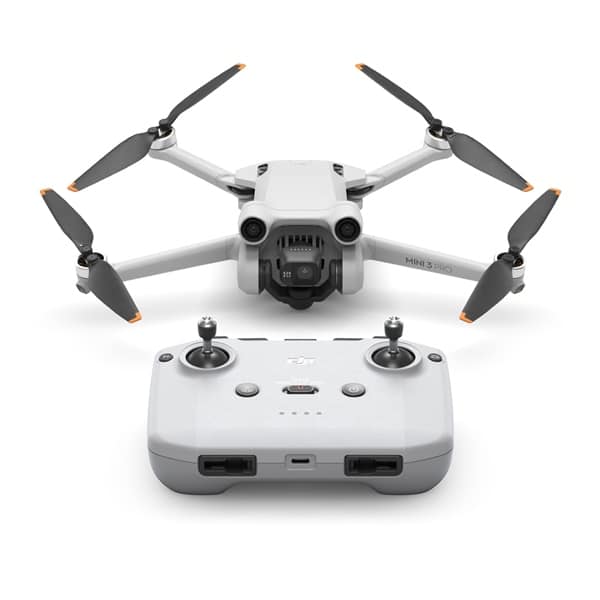
Most people meet the brand through its folding camera drones. These sit in three families that step up in sensor size, weight and capability. Each family has had several generations, so older and newer models often share a name. The full line-up is on DJI’s camera drones page, which also flags the models that have been discontinued.
Mini series
The Mini family is built around portability. DJI designs these drones to weigh under 249 g with the standard battery, and they fold small enough for a daypack. The DJI Mini 3 Pro pairs a 1/1.3-inch sensor with forward, backward and downward obstacle sensing. The Mini 2 Fly More Combo is a simpler 4K option with a 1/2.3-inch sensor and no obstacle avoidance.
The original Mavic Mini, an older model, is also in the range for anyone after a basic first drone. Newer Minis such as the Mini 4 Pro appear on DJI’s site but aren’t in our range. Our Mini 4 Pro guide explains how that model compares with the Mini 3 Pro and Mini 2 if you are weighing them up.
Air series
The Air family sits between the Minis and the flagship Mavics. These drones are heavier than a Mini but still fold down for travel, and the extra size leaves room for features such as a larger sensor. The Air 2S Fly More Combo uses a 1-inch sensor, records up to 5.4K video and includes MasterShots, a mode that strings several automated camera moves together.
The Mavic Air 2, which came before the Air 2S, is also listed in the range. DJI has since added the Air 3 and Air 3S to this family, but Drones Direct doesn’t carry them. If you want a bigger camera sensor than a Mini offers without stepping up to flagship size, the Air 2S is the model to look at in our range.
Mavic series
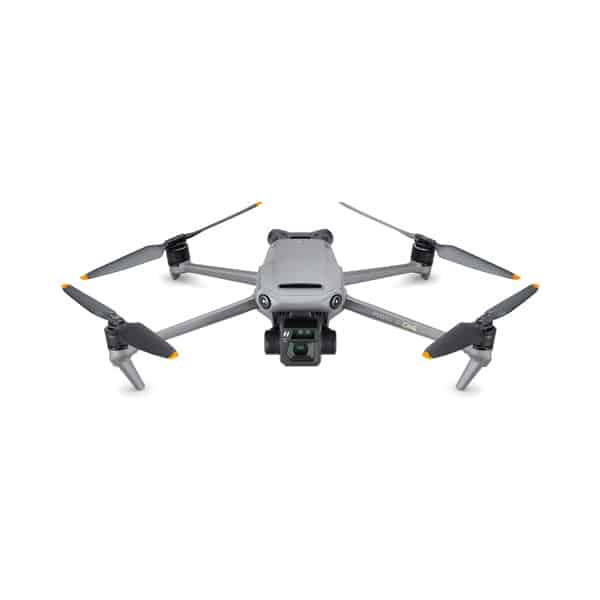
Early Minis and Airs carried the Mavic name too, but today it marks DJI’s flagship folding drones. The Mavic 3 family uses a Hasselblad camera with a 4/3 CMOS sensor. For the Mavic 3 Classic, DJI quotes up to 46 minutes of flight time, omnidirectional obstacle sensing and up to 15 km of video transmission.
The Mavic 3 Cine Premium Combo adds Apple ProRes recording for professional editing workflows, which suits filmmakers who grade their footage. The older Mavic 2 Pro, also in the range, uses a 1-inch Hasselblad camera. Above the Mavics, the Inspire 3 serves cinema crews, though it isn’t part of our range.
FPV and Avata: flying through goggles
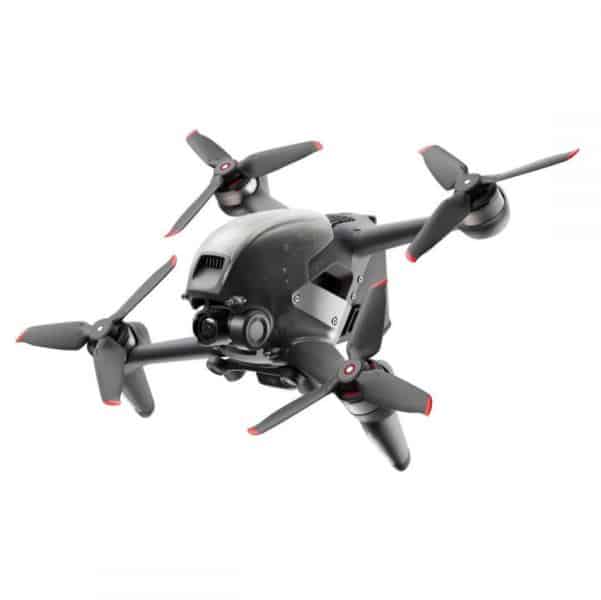
First-person view (FPV) drones are flown through goggles, so the pilot sees a live feed from the aircraft as if sitting in it. DJI describes the DJI FPV as a ready-to-fly FPV drone for pilots of any skill level. It records 4K/60fps video with a 150° field of view, and DJI quotes 28 ms of latency on the video link.
The DJI FPV Combo and the aircraft on its own are both in the range, along with FPV Goggles V2, the remote controller, spare batteries and a Fly More Kit. The Avata line takes a different approach, with built-in propeller guards for close-quarters flying. DJI lists the Avata 2 with intuitive motion control, but it isn’t in our range.
For other options, the FPV Drones category also includes iFlight digital HD quads. Goggles don’t change the rules about keeping your aircraft within visual line of sight, so check how that works on the CASA site before your first FPV flight.
Enterprise drones: Matrice and Mavic 3 Enterprise
The enterprise aircraft are tools for inspection, mapping, public safety and search and rescue. Many carry several sensors, such as zoom and thermal cameras, and models such as the Matrice 30 run on the DJI Pilot 2 app rather than the consumer app. DJI describes the Matrice 30 series as packing multiple high-performance sensors into a lightweight and portable body.
Drones Direct lists Matrice 30 and 30T kits with Enterprise Care Basic or Enterprise Care Plus in the Matrice M30 Series section. The DJI RC Plus controller, TB30 batteries and the BS30 battery station sit alongside them. The 30T is the thermal version, suited to night searches and electrical inspections.
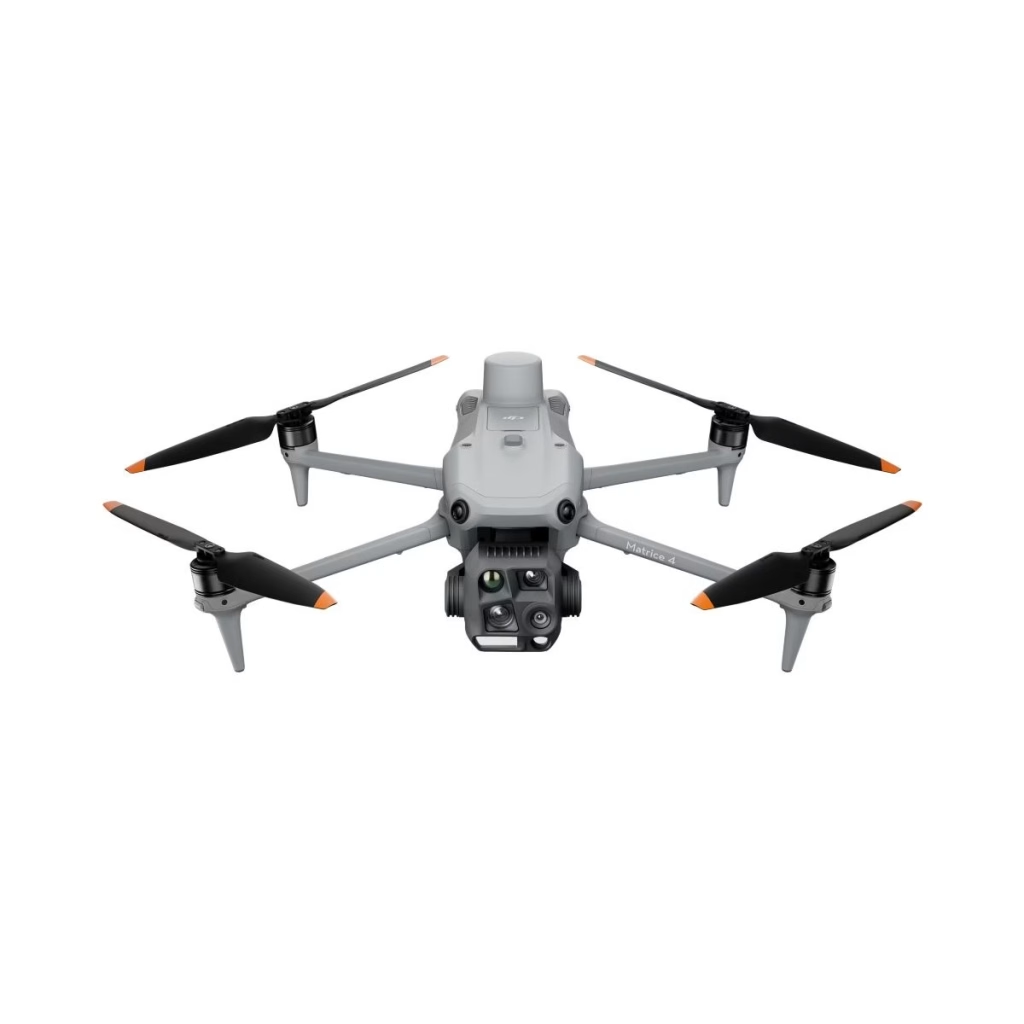
The Matrice 4T thermal drone is aimed at electricity, emergency response, public safety and forestry work, and the series includes a laser range finder for measuring distances. The Mavic 3 Enterprise section adds the Mavic 3 Multispectral for crop-health mapping, an RTK module for precise positioning and battery kits. Older Mavic 2 Enterprise models are listed too.
Farms and freight: Agras and FlyCart
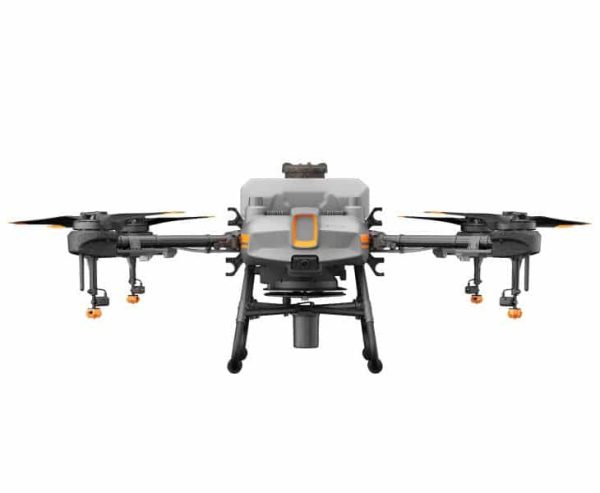
The Agras family covers spray drones for agriculture. For the Agras T10, DJI lists an 8-litre spray tank, overall IP67 water resistance, a spherical radar system and a frame that folds down by 70% for transport. Drones Direct also carries the T10 Spreading System 3.0 for granular work, plus spare flight batteries and the intelligent battery station.
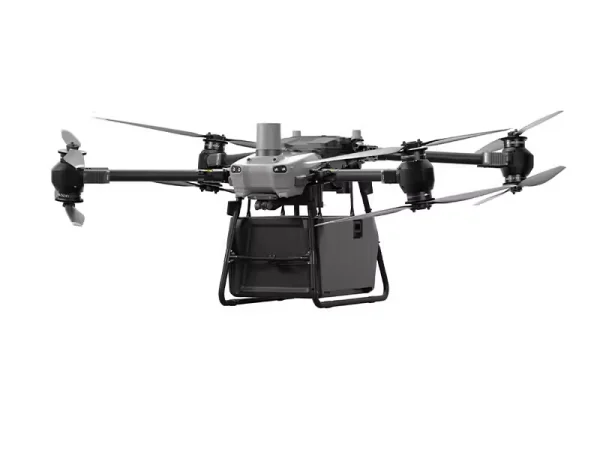
FlyCart is the delivery family. The FlyCart 30 delivery drone is a heavy-lift aircraft rated for up to 30 kg of payload in dual-battery mode and 16 km of flight with a full load. It has IP55 protection, a parachute among its safety features and an optional winch, which we carry as the FlyCart 30 Winch System Kit.
Larger aircraft such as the Agras T100 and FlyCart 100 appear on DJI’s site but aren’t in our range. Both families are for commercial operators, so the CASA requirements for work flying apply before any job starts.
Handheld cameras: Osmo and Ronin
The company’s stabilisation background also goes into cameras you hold rather than fly. The Osmo range covers action cameras, the Osmo Pocket gimbal camera, the Osmo 360 and Osmo Mobile phone gimbals. Ronin stabilisers such as the RS 5 carry mirrorless cameras, and the brand also makes wireless microphones and portable power stations.
Drones Direct carries one handheld model, the DJI OSMO Mobile 4, a three-axis phone gimbal that steadies smartphone footage. For 360 and action cameras, our range leans on Insta360 instead, including the Insta360 Sphere, a 360 camera that mounts on a DJI drone.
The technology DJI uses across its range
A few core systems appear in nearly every model. Understanding them helps you compare drones on more than camera specs and explains what you gain when you move up the range.
Video transmission
Each drone sends live video to the controller over the company’s own transmission system. The Mini 2 uses OcuSync 2.0, the Mini 3 Pro uses O3 and the Mini 4 Pro uses O4. Each generation brought a longer quoted range, and the step from OcuSync 2.0 to O3 lifted the live view from 720p to 1080p. Those range figures are measured in open, interference-free conditions, and Australian pilots must keep the drone within visual line of sight anyway.
Obstacle sensing and return to home
The Mini 2 has no obstacle avoidance. The Mini 3 Pro senses forward, backward and downward, while the Mavic 3 senses obstacles in every direction. Satellite positioning powers a return-to-home function that flies the aircraft back to its recorded home point, usually where it took off, when you trigger it or the signal drops. These are aids, not autopilots, so keep watching the aircraft and the area around it.
Intelligent flight modes
Automated modes help new pilots get polished shots. QuickShots fly preset moves such as orbits and pull-backs, while MasterShots strings several moves into one clip. ActiveTrack follows a moving subject, and Hyperlapse and Panorama build time-lapses and wide photos. Exact modes vary by model, so check the product page before you buy.
Apps and controllers
Consumer models such as the Mini, Air, Mavic 3 and DJI FPV run on the DJI Fly app. Enterprise models such as the Matrice 30 use Pilot 2 and can connect to the FlightHub 2 cloud platform. Controllers range from phone-holder designs such as the RC-N1 to screen controllers such as the DJI RC and the DJI RC Plus for the Matrice 30 series. Controllers are model-specific, so check compatibility before buying a spare.
DJI Care Refresh explained
DJI Care Refresh is the brand’s paid protection plan for camera drones and handheld devices. On its Care Refresh page, DJI lists cover for accidental damage such as collisions and water damage, plus natural wear and limited flyaway cover. Each replacement carries a listed replacement fee, so the plan reduces the cost of an accident rather than removing it.
The one-year plan lists two replacements, one of which can be for a flyaway. The two-year plan lists four, with two for flyaways. Terms, fees and eligible products differ by model and region, so read the terms that apply in Australia before relying on the plan.
Drones Direct carries Care Refresh plans for the Air 2S and the DJI FPV. The enterprise kits are listed with their own enterprise care plans, named in each product title, such as Enterprise Care Basic or Care Enterprise Plus. Buying a plan alongside the aircraft means you can add both to the cart in one order.
The DJI range at Drones Direct
Drones Direct is an online store at dronesdirect.com.au with more than 250 products. Here is where each part of the brand’s line-up sits in our range:
- Camera drones: the Mini 3 Pro, Mini 2, Air 2S, Mavic Air 2, Mavic 3 Classic and Mavic 3 Cine, plus older Mavic Mini and Mavic 2 Pro models, all in Camera Drones.
- FPV: the FPV Combo and aircraft, Goggles V2, remote controller, batteries and Fly More Kit.
- Enterprise: the Matrice 4T, Matrice 30 and 30T kits, the Mavic 3 Enterprise series and older Mavic 2 Enterprise models in Enterprise Drones.
- Agriculture and delivery: the Agras T10 and its add-ons, and the FlyCart 30 and winch kit.
- Education and handheld: Tello EDU classroom packs in Education Drones, and the OSMO Mobile 4.
- Accessories: batteries, Fly More kits, ND filters, cases and controllers in Accessories & Spares.
As a guide, the camera drones in this list run from under $1,000 for models such as the Mini 2 to over $7,000 for the Mavic 3 Cine Premium Combo. Prices change, so check each product page for the current price. Every product can be added to the cart and bought through a secure checkout, and shipping is calculated at checkout from your delivery address.
You can filter the full Drones Direct shop by category, price range or sale items, and sort the results. Orders are sent straight to you, and creating an account lets you see your orders and save addresses. If you’d like help matching a model to your flying, the team is on live chat before or after you buy.
How to choose the right model
Start with what you want to do, then match it to a family. A quick way to narrow the range:
- First drone or travel: a Mini such as the Mini 3 Pro or Mini 2. Our best budget drones list compares these with other entry-level picks.
- Better image quality in a portable body: the Air 2S and its 1-inch sensor.
- Professional video: the Mavic 3 Classic or the Mavic 3 Cine for ProRes footage.
- Immersive, fast flying: the FPV Combo, if you’re happy to learn goggle flying.
- Work: a Matrice, Mavic 3 Enterprise, Agras or FlyCart, plus the CASA business requirements.
Camera specs deserve a closer look than the headline resolution. Our guide to choosing a drone with camera explains sensor size, frame rates and colour profiles. Before you buy, our drone buying checklist covers combos, spare batteries, controller types and the difference between older and current models.
Flying safely and legally in Australia
Whichever model you choose, CASA’s standard operating conditions apply to recreational flying. In short:
- Fly no higher than 120 metres above ground level.
- Keep at least 30 metres from other people.
- Keep the drone within visual line of sight, and fly one drone at a time.
- Don’t fly over or above people, or in populous areas such as beaches, parks and sporting events.
- Stay away from emergency operations, and respect other people’s privacy.
CASA suggests using a CASA-verified drone safety app to see where you can and can’t fly, and the full CASA drone rules are worth reading before your first flight. For work or business flying, CASA has extra registration and accreditation requirements, so check them on the CASA site first. Our beginner’s guide to drones covers the basics in more depth.
Frequently asked questions about DJI
Is DJI a Chinese company?
Yes. DJI is headquartered in Shenzhen, China, and grew from a single small office in 2006. It started with flight controllers and gimbals before moving into complete camera drones. Its products are now used in filmmaking, agriculture, conservation, search and rescue and energy infrastructure, as well as by hobby pilots around the world.
Which DJI drone suits a beginner?
A Mini is the usual starting point because it’s light, compact and simple to fly. In our range, the Mini 3 Pro adds obstacle sensing and a larger sensor, while the Mini 2 keeps things simple with 4K video. Both fold small for travel, and both use the same app as the bigger models, so the skills carry over.
What is the difference between the Mini, Air and Mavic series?
They step up in size and camera capability. Minis are built to stay under 249 g with the standard battery and focus on portability. Air models are heavier and step up in camera hardware, such as the 1-inch sensor in the Air 2S. Mavic 3 models use a Hasselblad camera with a 4/3 CMOS sensor for flagship image quality.
Does Care Refresh cover a lost drone?
Partly. The plan lists limited flyaway cover alongside accidental damage and natural wear. The one-year plan includes one flyaway replacement out of two, and the two-year plan includes two out of four, each for a fee. Conditions vary by model and region, so read the terms on the manufacturer’s site before you count on it.
Does Drones Direct sell the Mini 4 Pro?
No, the Mini 4 Pro isn’t in our range. The closest options we carry are the Mini 3 Pro, which shares its 1/1.3-inch sensor size, and the Mini 2. Our Mini 4 Pro explainer compares all three, so you can decide whether a model in our range covers what you need.
Each family in the line-up exists for a reason, from the pocketable Minis to the Agras and FlyCart work aircraft. Pick the family that fits how you’ll fly, check the CASA rules, then browse the matching category to compare models and accessories in one place.