How far can a drone fly? Spec sheets often quote transmission ranges of 10 km or more, but that number tells only part of the story. How far a drone can fly technically, how far its battery allows, and how far you’re legally allowed to fly in Australia are three very different things.
This guide explains how far can a drone fly in practice: the difference between drone range and legal range, what affects drone range, real examples by type of drone and how to fly safely within the rules. Figures come from manufacturer specifications and product listings.
The short answer
- Transmission range: many modern camera drones are rated for several kilometres of video link in ideal, unobstructed conditions.
- Battery range: flight time limits how far a drone can travel and return, typically 20 to 40 minutes for camera drones.
- Legal range in Australia: you must keep the drone within visual line of sight, which in practice usually means a few hundred metres for small drones.
So while a drone may be capable of flying kilometres away, the practical and legal answer to how far can a drone fly is much shorter.
1. Transmission range explained
Transmission range is how far the drone can maintain a control and video link with the controller. Manufacturers measure it in ideal conditions: open space, no obstacles, minimal interference and specific regulatory settings.
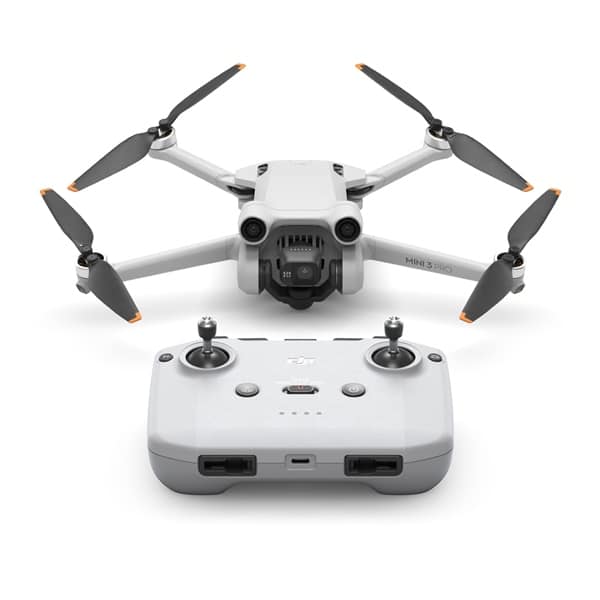
For example, DJI quotes transmission ranges of around 10 to 12 km for drones like the DJI Mini 3 Pro and DJI Air 2S under specific test conditions. In the real world, trees, buildings, hills and radio interference reduce drone range considerably.
2. Battery range and flight time
Battery life sets the real distance limit. A drone must fly out and back with a safe reserve. If a drone flies at 10 m/s for 15 minutes out, it needs at least the same time to return, plus a reserve for wind.
| Drone type | Typical rated flight time | What it means for range |
|---|---|---|
| Sub-250 g camera drones | Around 30 to 34 minutes | Plenty for flights within sight |
| Mid-range camera drones | Around 30 to 40 minutes | Longer sessions, still limited by sight |
| FPV freestyle drones | A few minutes | Short, intense flights |
| Long-range FPV builds | Can exceed 20 minutes | Efficient cruising within sight |
| Fishing drones | Around 20 to 30 minutes | Several bait drops per battery |
| Heavy-lift delivery drones | Varies with payload | Long range under approvals |
3. Legal range: visual line of sight
In Australia, the biggest limit on how far can a drone fly is the law. CASA’s standard operating conditions require you to keep the drone within visual line of sight: you must be able to see it with your own eyes, without binoculars or a screen.
Small drones become hard to see surprisingly quickly, often within a few hundred metres and sooner against a bright sky or busy background. If you can’t clearly see the drone and its orientation, it’s too far away. Our guide to CASA drone rules explains the rules in full.
Flying beyond visual line of sight
Flying beyond visual line of sight (BVLOS) requires specific CASA approval, typically for commercial operators with a remote pilot licence, an operator’s certificate and detailed safety procedures. It isn’t permitted for recreational pilots.
4. What affects drone range?
Several factors determine how far can a drone fly in a given situation.
- Obstacles: trees, buildings and hills block signals.
- Interference: Wi-Fi, power lines, radio towers and crowded areas reduce signal quality.
- Antenna orientation: pointing controller antennas correctly improves the link.
- Altitude: higher flights often have a clearer line to the controller, within the 120 m limit.
- Wind: headwinds slow the drone and drain batteries faster.
- Temperature: cold reduces battery performance.
- Payload: extra weight shortens flight time and range.
5. Examples by type of drone
Camera drones
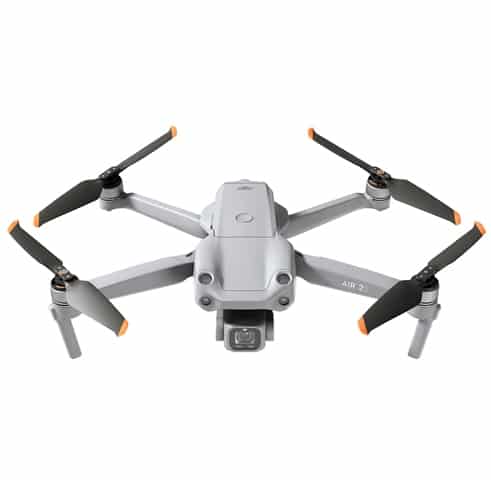
Camera drones like the DJI Air 2S have strong transmission systems and around half an hour of flight time. Legally, though, you’ll fly them within sight, which is far less than their technical drone range.
Fishing drones
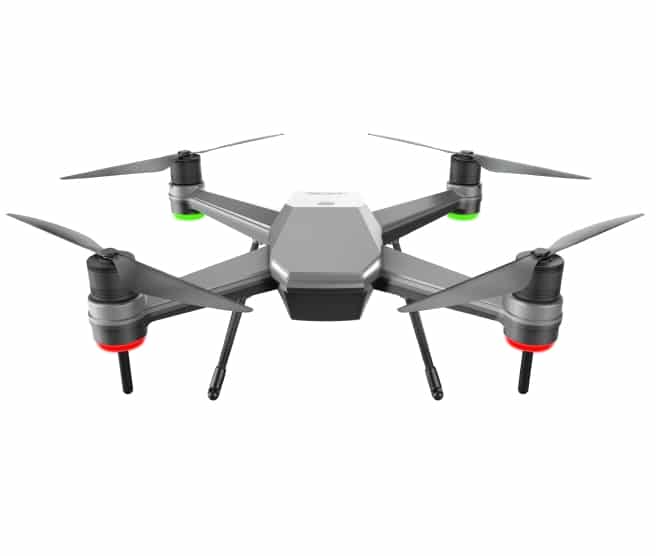
Fishing drones fly out over the water to drop baits. The Rippton SharkX listing quotes around 1 km of range, while the Fisherman MAX listing describes carrying baits more than 500 m out. You must still keep the drone within sight.
FPV drones
Freestyle FPV drones fly short, intense sessions. Long-range FPV builds like the iFlight Chimera5 LR HD are designed for efficiency, but in Australia you must keep the drone within sight of you or your observer.
Delivery drones
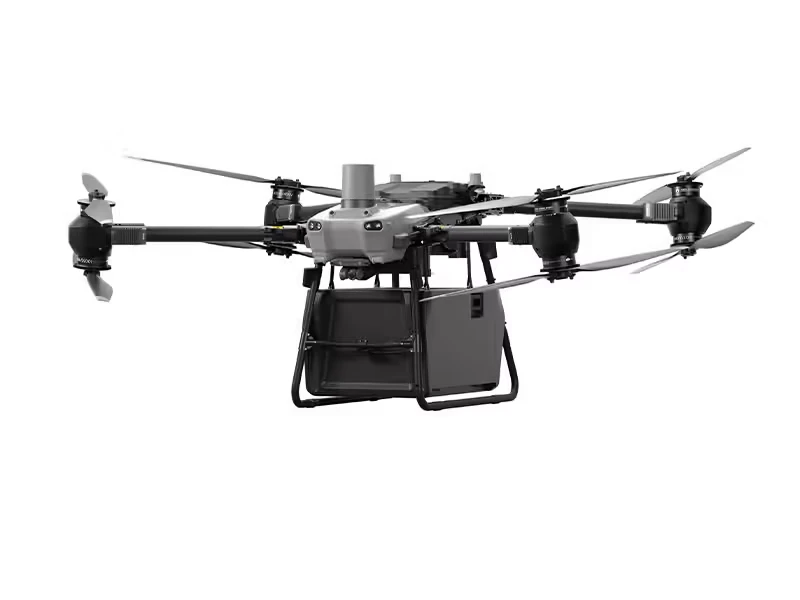
Heavy-lift delivery drones can cover significant distances under the right approvals. DJI quotes a maximum flight range of 28 km for the DJI FlyCart 30 under specific conditions. Long-distance delivery operations need CASA approvals.
Understanding transmission systems
The transmission system is the radio link between drone and controller. It carries your stick commands to the drone and the live video back to you. Better systems give a more stable picture, lower delay and stronger resistance to interference, which improves usable drone range.
- Digital video links used by modern camera drones provide sharp live video and automatic frequency switching to avoid interference.
- Dual-band systems switch between frequency bands to find the cleanest signal.
- Analogue FPV video, still used by some racing drones, has very low delay but a grainier image and shorter reliable drone range.
A strong link matters more than a big headline number, because you must keep the drone within sight anyway.
Antenna tips for a better signal
Small changes to how you hold the controller can noticeably improve your signal.
- Point antennas correctly. For most controllers, the flat side of the antennas should face the drone, not the tips.
- Keep a clear path. Avoid standing behind cars, buildings or trees that block the signal.
- Stay higher than obstacles. A slight rise in the ground can improve the link.
- Avoid interference sources. Move away from power lines, radio towers and crowded Wi-Fi areas.
- Keep the drone in front of you. Bodies and objects between the controller and drone weaken the signal.
Drone range in different environments
Open countryside
Open countryside usually offers the best drone range, with few obstacles and little interference. Your limit will almost always be how far you can see the drone, not the signal.
Coastlines
Coastal areas are open, but strong sea breezes can drain batteries quickly on the return leg. Keep the drone closer than you might over land and plan for a headwind on the way back.
Suburbs and cities
Buildings, Wi-Fi networks and mobile towers create interference and block signals. Expect a shorter, less stable drone range, and remember that cities are often populous areas where flying is restricted.
Bushland and valleys
Trees and hills block signals, and GPS can be weaker in deep valleys. Fly higher (within 120 m), stay close and be ready for signal warnings.
How to extend flight time
Flight time determines how far a drone can travel and return. These habits help you get more from each battery.
- Fly smoothly. Aggressive manoeuvres and high speeds drain batteries faster.
- Avoid strong wind, especially headwinds on the return.
- Keep batteries warm in cold weather before flying.
- Use healthy batteries. Older batteries hold less charge.
- Reduce weight. Remove unnecessary accessories.
- Carry spares. The simplest way to fly longer is to swap batteries.
Range for commercial work
Some commercial jobs, such as long-distance inspections, mapping large areas or deliveries, need more drone range than line of sight allows. These operations require specific CASA approvals for beyond visual line of sight, along with appropriate credentials and procedures. Our drone licence guide explains the path to more advanced approvals.
Common myths about drone range
- “The quoted range is what I’ll get.” Manufacturer figures are measured in ideal conditions. Real-world drone range is usually much shorter.
- “If the video is clear, I’m within the rules.” Legal limits are based on what you can see with your own eyes, not the screen.
- “Return-to-home means I can fly anywhere.” Return-to-home is a safety net, not a substitute for staying within sight.
- “Bigger antennas solve everything.” Aftermarket range boosters can help signal quality, but they don’t change the legal line-of-sight rule.
6. What happens if a drone flies out of range?
If the signal is lost, most modern drones trigger a failsafe, usually return-to-home. The drone climbs to a set height and flies back to its home point.
To make sure this works:
- Wait for a strong GPS lock before take-off so the home point is recorded.
- Set the return-to-home height above nearby trees and buildings.
- Choose return-to-home as the signal-loss action in the app.
- Keep the drone within sight so you rarely lose signal in the first place.
Do range extenders help?
Range extenders are antenna upgrades that fit some drone controllers, designed to strengthen the signal. Our range includes options such as the Raptor XR Range Extender for DJI Mavic Mini and the Raptor SR Range Extender for DJI Mavic Mini.
A stronger signal can mean a more stable video feed and fewer dropouts, especially in areas with interference or obstacles. But it doesn’t change the law: you must still keep the drone within visual line of sight. Think of range extenders as a reliability upgrade rather than a way to fly further.
Choosing a drone with reliable range
| Drone | Why it suits reliable flying | Category |
|---|---|---|
| DJI Mini 3 Pro | Strong digital link, sub-250 g | Camera drone |
| DJI Air 2S | Strong link, 1-inch sensor | Camera drone |
| Autel EVO Nano Plus | Sub-250 g with obstacle avoidance | Camera drone |
| Rippton SharkX | Around 1 km listed range for fishing | Fishing drone |
| DJI FlyCart 30 | Long range under approvals | Delivery drone |
A pre-flight checklist for safe drone range
- Check the airspace and location rules.
- Confirm a strong GPS lock and recorded home point.
- Set return-to-home height above nearby obstacles.
- Set signal-loss and low-battery actions to return-to-home.
- Check the wind forecast and in-app warnings.
- Fully charge the drone, controller and phone.
- Plan to keep the drone within sight at all times.
If you lose your drone
Even careful pilots occasionally lose sight or signal. If it happens:
- Stay calm and watch the sky in the drone’s last known direction.
- Trigger return-to-home if the controller still has a connection.
- Check the app map for the drone’s last recorded position.
- Listen for the motors as it returns.
- Search the last known location if it doesn’t come back, and check the flight log.
- Report a lost drone if it may pose a hazard, such as near an airport.
7. How to fly safely within range
- Keep it close. Stay well within sight, especially when learning.
- Watch the battery. Head back with plenty in reserve, particularly into wind.
- Avoid interference. Fly away from power lines, radio towers and crowded areas.
- Orient your antennas. Follow the manufacturer’s guidance for the best signal.
- Use an observer when flying FPV or in busy areas.
- Plan your flight so you know the area and potential obstacles.
Why keeping your drone close gives better results
Flying close isn’t just about the rules. It also produces better footage and safer flights.
- Better framing: you can see exactly what the drone is doing and adjust smoothly.
- Stronger signal: a close drone keeps a clear, stable video feed for sharper footage.
- More battery margin: short trips leave more time for filming.
- Faster reactions: you can spot birds, people or obstacles and respond quickly.
- Less risk: a nearby drone is easier to recover if something goes wrong.
Most great drone shots are captured within a few hundred metres of the pilot. Distance rarely improves footage; position, light and smooth movement do.
Range and sub-250 g drones near airports
Sub-250 g drones may fly within 5.5 km of controlled aerodromes if they stay clear of approach and departure paths. In these areas, keeping the drone close and low is especially important, and you must land immediately if a crewed aircraft approaches. Heavier drones must stay outside the 5.5 km zone.
Range, rules and recreational flying
For recreational pilots, the question isn’t really how far can a drone fly, but how far can you see it. Keeping your drone close is safer, legal and gives you better control and footage. Check CASA’s drone rules for the latest requirements.
How far can a drone fly FAQ
How far can a drone fly from its controller?
Technically, many camera drones are rated for several kilometres in ideal conditions. Legally in Australia, you must keep the drone within visual line of sight, which is usually a few hundred metres for small drones.
How far can a drone fly on one battery?
It depends on speed, wind and flight time. Most camera drones fly around 20 to 40 minutes per battery, and you must allow enough battery to return safely.
Can I fly my drone out of sight with a screen?
No. Watching the screen doesn’t count as visual line of sight. You must see the drone with your own eyes, unless you’re flying FPV with an observer who keeps it in sight.
What is BVLOS?
BVLOS means beyond visual line of sight. It requires specific CASA approval and is used for some commercial operations such as long-distance inspections and deliveries.
Does altitude affect drone range?
Yes. Flying higher can improve the signal by reducing obstacles, but you must stay at or below 120 m above ground level.
Why is my drone range much shorter than advertised?
Manufacturer figures are measured in ideal, unobstructed conditions. Trees, buildings, hills and interference from Wi-Fi or power lines all reduce real-world drone range.
Does a sub-250 g drone have less range?
Not necessarily. Many sub-250 g drones use the same transmission systems as larger models. Their light weight makes them more affected by wind, which can limit how far they can fly and return.
How far can a drone fly in the wind?
Wind reduces how far a drone can safely travel, because it drains the battery faster, especially on the return leg into a headwind. In windy conditions, keep the drone closer and return earlier than usual.
How far can a fishing drone fly to drop bait?
It depends on the model and conditions. The Fisherman MAX listing describes carrying baits more than 500 m out, and the Rippton SharkX quotes around 1 km of range. You must still keep the drone within sight under CASA’s rules.
Is it safe to fly my drone over water at a distance?
Flying over water carries extra risk, because a drone that goes down is usually lost. Keep the drone close, keep a generous battery reserve and consider a waterproof model for water-based flying.
Choose the right drone for your flying
So, how far can a drone fly? Technically kilometres, practically as far as your battery allows, and legally as far as you can see it. For most pilots, a stable camera drone with strong transmission and reliable return-to-home is all you need.
Explore our camera drones, compare FPV drones or visit the drone shop.