Any underwater drone Australia’s boat owners, anglers and farmers take out has to cope with salt water, strong tides, changing visibility and protected marine life. This guide covers those local conditions, common uses, the rules worth checking and how to care for gear after salt water.
It builds on our underwater drones explainer, which covers how ROVs work and which specs matter. Here the focus is local: the water, wildlife, rules and care that matter for an underwater drone. Australian rules depend on the exact place you dive, so each one below links to an official source. The models mentioned are Chasing ROVs from the Drones Direct range.
What makes Australian waters different
Australia’s coastline runs from tropical reefs to cool southern kelp forests, with estuaries, harbours, rivers and farm dams in between. Each setting asks something different. For an underwater drone, Australian conditions tend to test five things: salt resistance, thrust against current, camera performance in murky water, wildlife awareness and how the kit copes with heat and swell.
Salt water
Salt is the constant on the coast. It dries into crystals on seals, connectors and thruster shafts, and it speeds up corrosion on exposed metal. A fresh-water rinse after every sea session is the most useful habit you can build with an underwater drone. Australia’s coastal ramps, beaches and jetties all count as salt-water launches, even for a quick look.
Tides and currents
Tidal range varies widely around the country. Parts of the north-west see very large tides, while many harbours and estuary entrances run strong flows as the tide changes. Current is the main limit for small ROVs. Chasing, for example, advises using the Chasing Dory in calm water and avoiding swift currents and heavy surge.
Plan tidal sites around slack water, the short window around the turn of the tide when the flow eases. Even then, the tether catches current along its whole length, so pay out only what you need. Conditions for an underwater drone Australia-wide can change hour by hour at tidal sites, so check a tide table before you leave home.
Visibility
Visibility changes from day to day. Reef water is often clear, while harbours, estuaries and dams can turn murky after rain, wind or boat traffic. Plankton and stirred-up sand reduce it further. Lights help at close range: Chasing lists two 1,200-lumen LEDs on the Gladius Mini S and two 2,000-lumen LEDs on the M2, M2S and M2 Pro.
No camera sees far through heavy silt, so a close, slow approach works better than more power. The murkiest days are best saved for practising tether handling with your underwater drone. Australian divers often time estuary dives around high tide, when cleaner ocean water pushes in.
Wildlife and your underwater drone
Australian waters hold animals that need space and some that demand respect. Turtles, dugongs, seals, dolphins, whales and seabirds can all be disturbed by a buzzing drone. In northern waters, saltwater crocodiles are a real risk for anyone launching from a bank, beach or low jetty, so think about where you stand, not just where the drone goes.
Wildlife should shape where you drive any underwater drone. Australian marine park rules can include minimum approach distances for some species, covered in the rules section below.
Weather, swell and heat
Swell and wind often make launching and recovery harder than the dive itself. Choose sheltered spots, keep the tether clear of rocks and oyster-covered pylons, and avoid exposed ledges in any swell. Heat is the other risk for an underwater drone. Australia’s summer sun can push dark cases and batteries well past comfortable temperatures.
Keep gear shaded and check the operating range on the spec sheet. Chasing lists minus 10 to 45 degrees Celsius for the Gladius Mini S and the M2 series.
Where to use an underwater drone: Australia’s main water types
Most sessions fall into one of five settings, each with its own hazards and rewards:
- Tropical reefs and islands: often clear, warm water, with protected wildlife and zoning in many areas.
- Sheltered bays and harbours: calmer water, more boat traffic and variable visibility after rain.
- Estuaries and river mouths: strong tidal flow, low visibility and snags such as fallen timber and old pylons.
- Southern coasts: cold water, swell and kelp that can wrap around a tether.
- Farm dams and inland water: fresh water, often murky, with pumps, inlets and pipes to inspect.
Plan for the toughest setting you will visit regularly, not the easiest. Rules for using an underwater drone Australia-wide also differ by setting, which is why the rules section below starts with the place rather than the drone.
Popular uses around boats, jetties, farms and coasts
Most local uses fall into four groups, and one drone can often cover more than one.
Boats and moorings
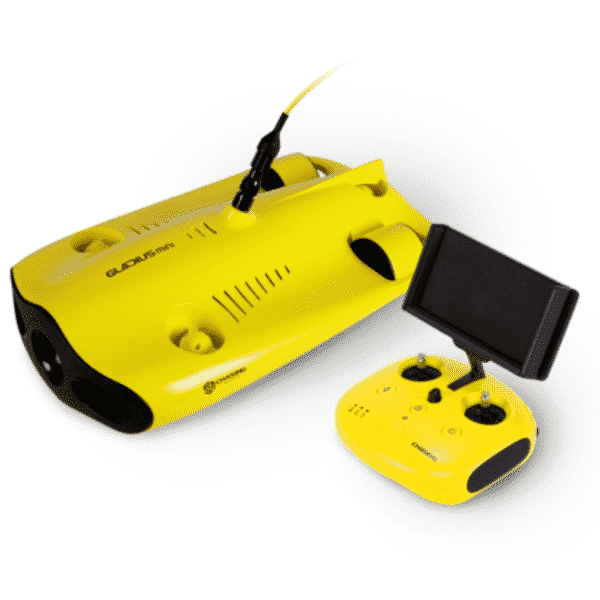
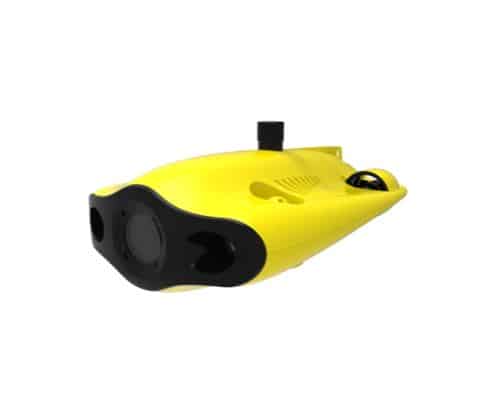
Boat owners use ROVs to check hulls, propellers, anodes and rudders without diving or hauling out. They can also follow a mooring chain down to inspect shackles and the block. The Chasing Gladius Mini S, rated to 100 metres with 4K video, has plenty of depth for that work. Which underwater drone Australia’s boaties choose usually comes down to mooring depth, local current and how much gear they want to carry.
Jetties, marinas and pontoons
Jetties and marinas make common first sites because the water is often sheltered and launching is easy. Keep the tether clear of boat traffic and propellers, and ask the operator before using a drone inside a marina.
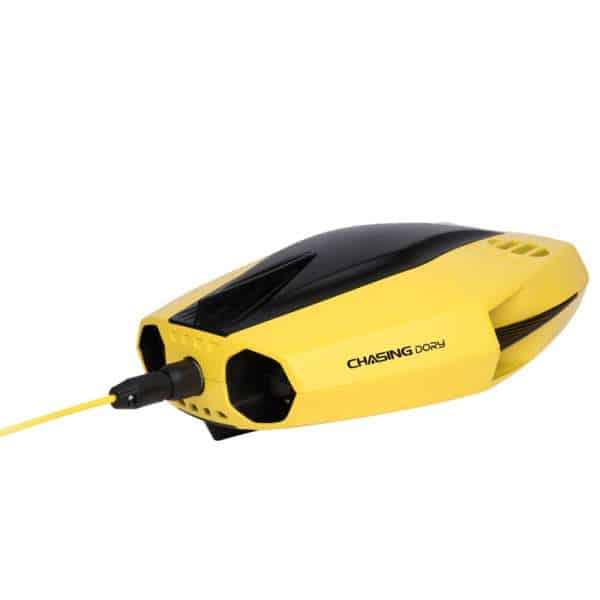
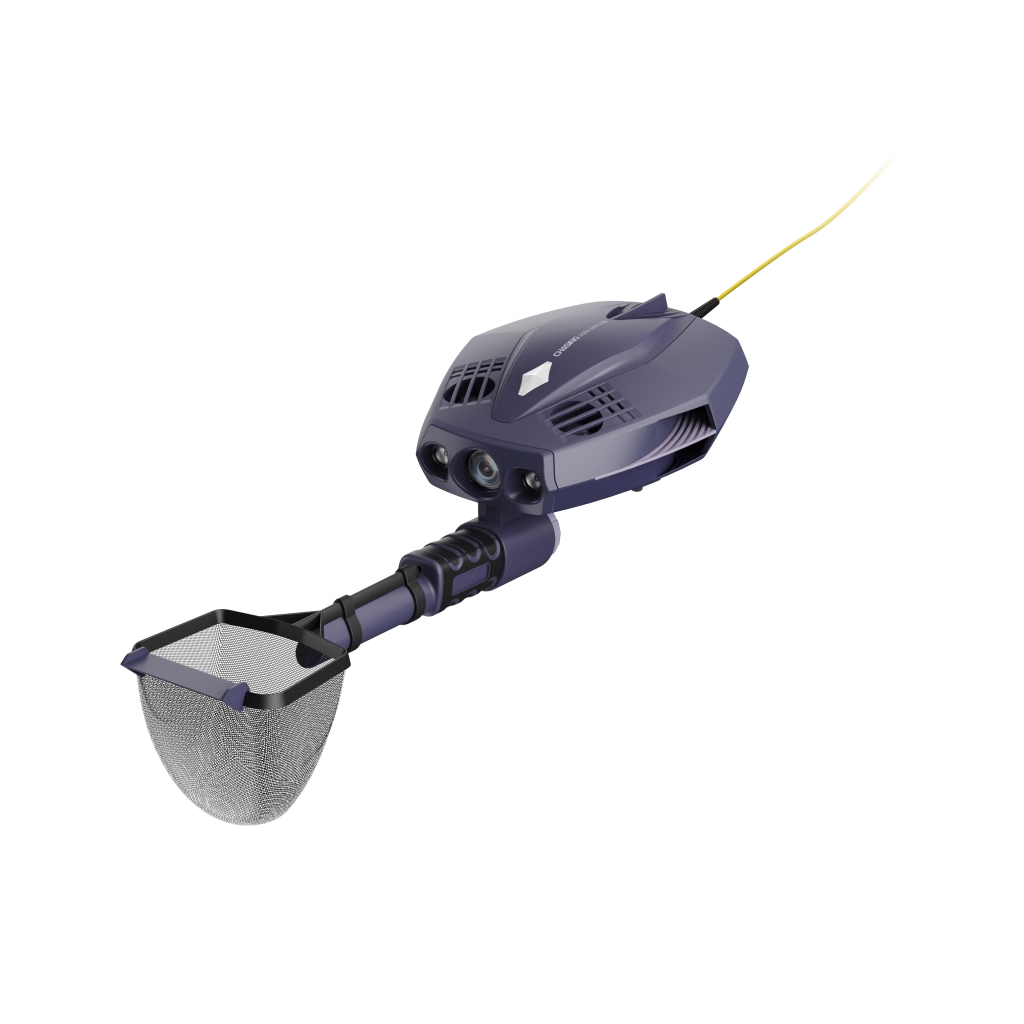
A compact underwater drone Australia’s jetty anglers can carry in a backpack, such as the Dory, suits this kind of calm, shallow water. Beach and harbour treasure hunters can try the Chasing Dory Explore, which adds a metal detector for close-range searching.
Farm dams and aquaculture
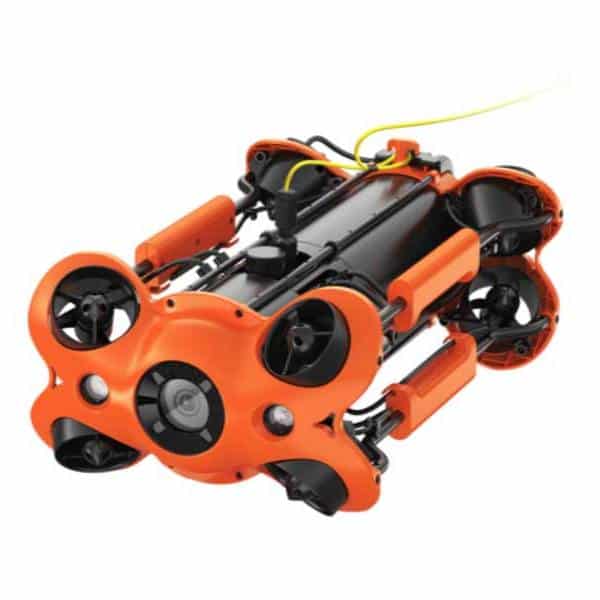
On farms, an ROV can check dam walls, pump inlets and pipes without anyone getting in the water. Aquaculture operators use them to inspect nets, pens and moorings. Chasing lists aquaculture inspection among the M2’s applications, and the Chasing M2 Series accepts tools such as a robot claw and laser scaler. The underwater drone Australia’s aquaculture operators need tends to be heavier and more expandable than a recreational model, because the work is regular and often in open water.
Fishing and coastal exploring
Anglers use underwater cameras to see structure, weed and fish before committing to a spot. The Chasing F1 Fish Finder Drone is built for this. According to Chasing, it travels on the surface, lowers a camera on an automatic reel to a maximum working depth of 20 metres and uses GPS to hold position.
Fishing line, hooks and berley all bring hazards for an underwater drone. Australian anglers sharing a jetty will appreciate a tether kept well clear of their lines.
Permissions for an underwater drone: Australian rules to check
No single rulebook covers every underwater drone. Australian waters are managed by different agencies depending on location, and the rules can change with the purpose of your dive and whether it is commercial. The sources below are a starting point. Always check the rules for the exact place you plan to dive.
The Great Barrier Reef Marine Park
Because ROVs film as they go, the GBRMPA filming and photography guidelines are the place to start on the Reef. They state that filming on or under the water is allowed without a permit in most areas of the Marine Park when it has negligible impact, which they call low impact recording.
For remotely operated vehicles, low impact recording includes conditions such as:
- Surface or submarine units weigh less than 25 kg, including equipment.
- Units stay at least 20 metres from marine turtles, 30 metres from crocodiles and dugongs, and 75 metres from seabirds.
- Plants and animals are not chased, touched, fed or otherwise disturbed.
- Approach distances for whales and dolphins comply with the Marine Park regulations.
Activities of a commercial nature often need a permit, and GBRMPA says permits for filming in Preservation Zones and some Scientific Research Zones are unlikely to be approved. The guidelines also point to the Australian Maritime Safety Authority and Maritime Safety Queensland for surface and submarine units. They are relevant to any underwater drone Australia’s reef visitors take into the Marine Park, so read the full page first.
Australian Marine Parks
Further offshore, Parks Australia manages a separate network. The Australian Marine Parks general use page says the 60 marine parks it manages typically start in Commonwealth waters. Visitors can access all zones except Sanctuary Zones for general use, and Sanctuary Zones are closed to the public.
The same page says a permit is required to operate remote piloted aircraft, such as drones, in these parks. That wording is about aircraft and the page does not mention ROVs, so check with Parks Australia before launching an underwater drone. Australian Marine Parks zone rules also vary by park, and the page links to factsheets for each network.
State and territory marine parks
Closer to shore, states and territories manage their own marine parks and reserves. In New South Wales, for example, the NSW marine protected areas page says six multiple-use marine parks cover around a third of the state’s marine estate, alongside twelve aquatic reserves. Rules differ between reserves, with some banning fishing in all or part of the area.
Other states and territories publish their own maps and rules. Before each new dive site, find the managing agency and check whether the spot sits in a zone with extra limits.
Commercial work, ports and private property
Paid inspection, filming or survey work usually brings extra requirements, and agencies may set their own conditions. Ports, marinas and private jetties have owners or operators, so ask permission before launching from or near them.
CASA rules are for aircraft
CASA’s drone rules apply to aircraft, so they cover flying drones, including waterproof models that take off from and land on water. If you also fly one from our Waterproof & Fishing Drones category, follow CASA’s drone rules, such as flying no higher than 120 metres and keeping at least 30 metres from other people. An ROV that stays underwater is not an aircraft, so the place-based rules above are what matter for it.
Protecting marine life and other water users
Good habits protect wildlife and keep popular dive sites open to everyone:
- Keep well back from turtles, dugongs, seals, dolphins and whales, and stop if an animal changes its behaviour.
- Never chase, touch, feed or corner wildlife with the drone.
- Keep thrusters off seagrass, coral and soft sediment to avoid damage and clouded water.
- Respect privacy and avoid filming people, boats or homes without consent.
A responsible operator is the best safety feature of any underwater drone. Australia’s coastal waters are shared by swimmers, divers, anglers and boats, often in the same small bay.
Choosing an underwater drone: Australian conditions to match
Matching the drone to the site is the key decision when buying an underwater drone. Australian tidal sites are hard on an under-powered ROV, while a heavier model is simply more to carry for calm-water use. These pairings follow Chasing’s published specs:
- Calm jetties, pools, bays and travel: the Dory or Dory Explore, rated to 15 metres and about 1.1 kg.
- Boat checks, moorings and diving support: the Chasing Gladius Mini or Gladius Mini S, with 4K video and a 100-metre rating.
- Tidal sites and inspection: the Chasing M2 or M2S Advanced Set, with eight vectored thrusters for control in all directions.
- Deeper commercial work: the M2 Pro, rated to 150 metres, or the M2 Pro Max, rated to 200 metres.
- Fishing: the F1 Fish Finder Drone, which works from the surface.
As a guide at the time of writing, the Dory models sit under $1,000 and the Gladius Mini models sit between $1,500 and $2,500. Prices change, so the product page shows the current price. Our guide to affordable underwater camera drones covers the entry level in more detail.
Caring for your gear after salt water
Ten minutes with a hose is cheap insurance for an underwater drone. Australian salt water is unforgiving on seals and connectors left to dry unrinsed. After every session:
- Rinse the drone, tether, reel and connectors in fresh water soon after every sea dive.
- Check the thrusters for weed, sand, fishing line and small shells, and clear them gently.
- Dry everything in the shade before packing, with connector covers in place.
- Inspect the tether for nicks, kinks and abrasion from rocks or oysters.
- Rinse and dry gear before moving to a new waterway, which also helps avoid spreading marine pests.
- Keep batteries out of hot cars and direct sun, and follow Chasing’s charging guidance.
This routine suits any underwater drone Australia-wide, whether it lives on a boat or in a ute. Wear parts and transport options are in the range too, including the M2/M2-S Motor Replacement, Mini S Replacement Motor, M2 Carry Case and Dory Travel Backpack. For remote trips, the EcoFlow portable power range includes power stations and solar panels.
A simple pre-dive checklist
A short checklist saves wasted trips with an underwater drone. Australia’s coastal conditions change quickly, so run through it before every dive, especially at a new site:
- Check the zoning and rules for the exact spot on the managing agency’s website.
- Check tide, wind and swell, and aim for slack water at tidal sites.
- Charge the drone, controller and phone or tablet.
- Inspect seals, thrusters and the tether before launch.
- Choose a launch spot with firm footing, away from swimmers and boat traffic.
- Plan where the tether will run and how you will recover the drone.
The list works for an underwater drone Australia-wide, from Darwin jetties to Tasmanian bays.
Buying from Drones Direct
Drones Direct is an online store at dronesdirect.com.au with more than 250 products, including the Underwater Drones category of Chasing ROVs and accessories. Every product can be added to the cart and bought through a secure checkout. Shipping is calculated at checkout from your delivery address, so the full cost is shown before you pay, and orders are sent straight to you.
Accessories such as the E-Reel, LED Diving Video Light and Grabber Claw are listed for the M2 series. Creating an account lets you see orders and save addresses, and the full shop can be filtered by category, price range and on-sale items. Still deciding on an underwater drone? Australian buyers can reach the team through live chat on the site, before or after buying.
Underwater drone Australia FAQs
Do I need a permit for an underwater drone?
Australia has no single answer, because rules depend on the place and the purpose. In the Great Barrier Reef Marine Park, low impact filming may not need permission, while commercial activities often need a permit. Sanctuary Zones in Australian Marine Parks are closed to the public. Check the managing agency’s rules for the exact spot before you launch.
Do CASA rules apply to an underwater drone?
Australian aviation rules from CASA are written for aircraft, so they cover flying drones, including waterproof models that land on water. An ROV that stays in the water is a different kind of craft. Marine park, maritime safety and local rules can still apply, so check them for each site. Our beginner’s guide to drones covers the flying side.
Can I use an underwater drone on the Great Barrier Reef?
Often, yes, within the rules. GBRMPA’s guidelines allow low impact filming without a permit in most areas, with conditions such as a 25 kg limit for submarine units and minimum distances from turtles, crocodiles, dugongs and seabirds. Commercial work and some zones are treated differently, so read the full guidelines first.
Which models handle tidal water?
Tidal sites call for thrust and control. The M2, M2S and M2 Pro use eight vectored thrusters for movement in all directions. Wherever you use an underwater drone Australia-wide, plan tidal sessions around slack water and keep the tether short.
What is the best way to clean an underwater drone?
Australian sun dries salt onto gear quickly, so rinse the drone, tether and connectors in fresh water soon after every sea session. Clear the thrusters of weed, sand and line, then dry everything in the shade.
Treat the site, not the spec sheet, as the starting point for any underwater drone. Australia’s waters reward good planning, careful tether handling and respect for wildlife. Check the rules for the exact place you will dive, then browse the Underwater Drones category to find a model that suits it.