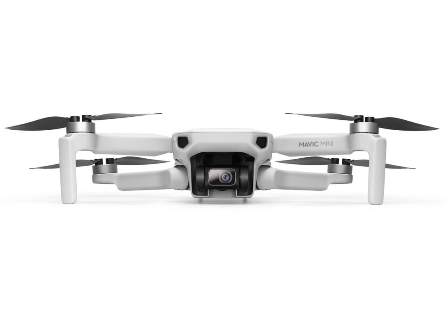
The best budget drones give you a steady camera, simple controls and enough flight time to learn properly, without the cost of a prosumer aircraft. This guide covers the entry-level end of the Drones Direct range, from a programmable classroom drone to folding 4K camera drones that weigh under 250 grams. For each pick, we explain who it suits, what it does well and what you give up at a lower price.
Everything here comes from published manufacturer specs and the store’s own range, not from test flights. If you’re new to flying, start with our plain-English guide to drones, then come back to compare the best budget drones side by side. If you already have a shortlist, our checklist for buying a drone covers what to confirm before you reach the checkout.
What counts as a budget drone in this guide
Budget means different things to different buyers, so here’s the line we’ve drawn. Every drone on our shortlist had a starting price under $1,200 when we wrote it. Prices change often, so the product page always shows the current price. That band covers the sub-250 gram folding minis from DJI and Autel, a coding drone, a simple starter drone and a digital FPV quad.
It leaves out the DJI Air 2S, Mavic Air 2 and Mavic 3 Classic, which all sit higher in the range. They’re capable aircraft with bigger sensors, but they sit a step above the best budget drones most first-time buyers have in mind. You’ll find them in the full camera drones category if your budget stretches further.
Within that band, the best budget drones fall into three groups. Folding camera drones suit travel, social video and family filming. Learning drones suit kids, students and classrooms. FPV quads suit people who want immersive, goggles-on flying.
How we chose the best budget drones
We didn’t rank these drones by price alone. The best budget drones are easy to learn on, safe to fly and still enjoyable after the first month. We weighed these factors using specs published by DJI, Autel and the other makers:
- Camera: sensor size, video resolution and gimbal stabilisation.
- Weight class: sub-250 gram drones are easier to carry and travel with.
- Flight time: the maker’s quoted maximum, knowing real flights are shorter.
- Video link: how reliable the connection to the controller is.
- Safety aids: obstacle sensing, return-to-home and beginner modes.
- Running costs: spare batteries, cases and other essentials.
One caution on flight times: makers quote them in windless conditions at a steady speed. DJI, for example, measures the Mini 2’s 31 minutes while flying at 4.7 m/s with no wind. Real flights with hovering, climbing and a breeze land well short of that. The same gap applies to all of the best budget drones, so plan on spare batteries from the start.
The best budget drones at a glance
Here’s the short version, with more detail on each model below. Treat the list as a set of starting points, then choose the trade-offs that suit you best. Budget drones always compromise somewhere, and the right compromise depends on how you’ll fly.
- DJI Mini 2: a strong pick for a first camera drone, with 4K video in a sub-249 g body.
- DJI Mini 2 Fly More Combo: the same drone with extra batteries for longer days out.
- DJI Mavic Mini (older model): a lower-cost way into a DJI folding mini.
- Autel EVO Nano and EVO Nano Plus: sub-250 g options with forward, backward and downward obstacle sensing.
- DJI Mini 3 Pro: the stretch pick, with a larger 1/1.3-inch sensor and 4K at up to 60fps.
- Airwood 4in1 Drone Professional: the most affordable flying drone in this list.
- CoDrone EDU: a programmable drone for learning to code.
- iFlight TP X5 HD BNF: a digital HD FPV quad for pilots who already own a radio and goggles.
Best budget drones under 250 grams
Most people shopping for the best budget drones end up choosing a folding mini. These weigh under 250 grams, fold down small enough for a daypack and carry a camera on a 3-axis gimbal. Their light weight makes them easy to travel with. CASA’s rules still apply every time you fly, and we cover them further down.
DJI Mini 2
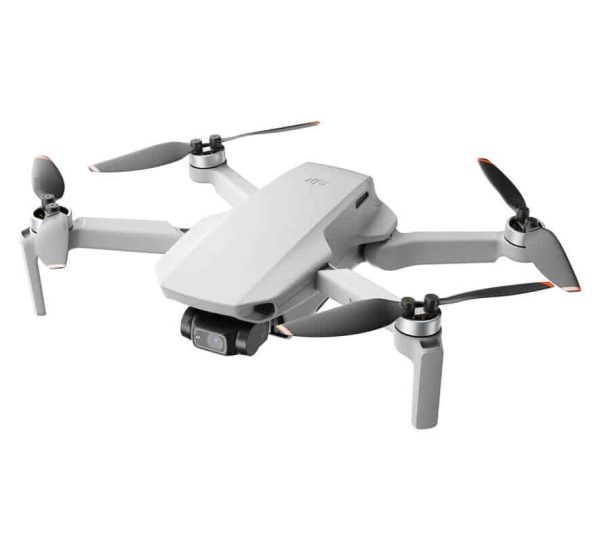
The DJI Mini 2 is a strong pick for a first camera drone. DJI lists a takeoff weight under 249 g, a 3-axis gimbal, 12 MP photos and 4K video at up to 30fps, with a quoted maximum flight time of 31 minutes. It uses DJI’s O2 video transmission, a longer-range link than the Enhanced Wi-Fi in the earlier Mavic Mini. Full specs are on DJI’s Mini 2 support page.
The trade-offs are typical of the best budget drones. There’s no obstacle sensing, so you need to keep clear of trees and buildings yourself. The small sensor handles bright daylight far better than dusk, and 4K tops out at 30fps. For travel clips, family outings and learning the basics, those limits rarely get in the way.
DJI Mini 2 Fly More Combo
If you’ll fly often, the Mini 2 Fly More Combo is worth a look. It’s the same aircraft, bundled with extra batteries and charging gear, so you can keep flying after the first pack runs flat. Buying spare batteries separately adds up quickly, so for regular flyers this is one of the most practical of the best budget drones here. Check the product page for exactly what’s included.
DJI Mavic Mini (older model)
The DJI Mavic Mini is an older model, but it still earns a spot among the best budget drones. It suits buyers who mainly want calm-weather photos and simple video. DJI lists it at 249 g with a 3-axis gimbal, 12 MP photos and 2.7K video at up to 30fps. Its quoted flight time is 30 minutes, and in the range it costs less than the Mini 2.
The catch is the video link. The Mavic Mini uses Enhanced Wi-Fi rather than DJI’s O2 system, and DJI quotes a much shorter maximum range for it. There’s no 4K mode either. A Mavic Mini Fly More Combo is also listed if you’d rather have spare batteries from day one. Because it’s an older model, check app and accessory compatibility before you buy.
Autel EVO Nano and EVO Nano Plus
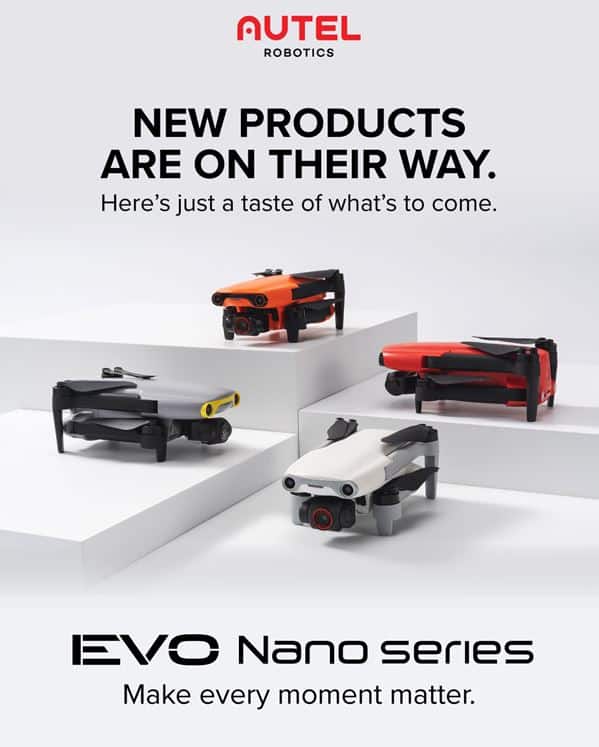
Autel’s EVO Nano series gives you a sub-250 g alternative to DJI. The Autel EVO Nano uses a 1/2-inch, 48 MP sensor and records 4K at up to 30fps, with a quoted flight time of 28 minutes. Its standout feature at this level is obstacle sensing to the front, rear and below. That extra safety net is uncommon among the best budget drones, and nervous first-time pilots will appreciate it.
The EVO Nano Plus steps up to a larger 1/1.28-inch, 50 MP sensor with an f/1.9 aperture, which helps when the light softens. Both models use Autel’s SkyLink transmission and the Autel Sky app. You can compare the full spec sheets on Autel Robotics’ website. If image quality matters most, the Plus may suit you best. Budget drones with larger sensors cope better at dawn and dusk.
DJI Mini 3 Pro, the stretch pick
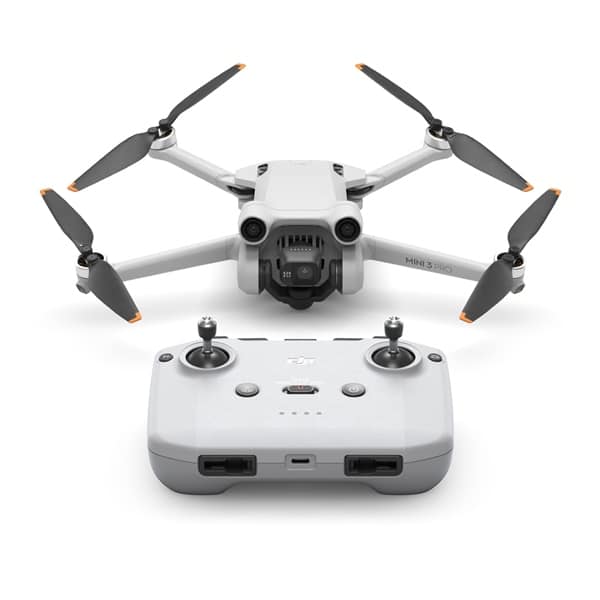
The DJI Mini 3 Pro sits at the top of our best budget drones list, and it shows in the specs. DJI lists a 1/1.3-inch sensor, 48 MP photos and 4K video at up to 60fps. It adds forward, backward and downward vision sensors for obstacle detection, DJI O3 transmission and a quoted 34-minute flight time with the standard battery.
DJI’s Intelligent Flight Battery Plus raises the quoted maximum to 47 minutes, but DJI notes the aircraft then weighs about 290 g. The range includes a Mini 3 Pro Fly More Kit and a Fly More Kit Plus, so check each product page for the batteries included. The Mini 4 Pro isn’t in the range, but our DJI Mini 4 Pro guide explains how the two compare.
Best budget drones for learning and coding
Not every first drone needs a 4K camera. For younger pilots, classrooms and anyone who mainly wants to practise stick control, a simple starter drone can make more sense. Of the best budget drones in this guide, these two suit basic flying practice and learning to program.
Airwood 4in1 Drone Professional
The Airwood 4in1 Drone Professional is the most affordable flying drone in this list. It was under $200 when we wrote this guide, but prices change, so the product page shows the current price. The range lists it as an entry-level drone, which makes it a sensible first step for kids and casual flyers. Check the product page for its camera, battery and included accessories.
Don’t expect it to match a DJI or Autel mini for image quality or stability. It earns its place among the best budget drones on price and its entry-level focus. It’s a low-stakes way to find out whether flying is something you’ll stick with.
CoDrone EDU
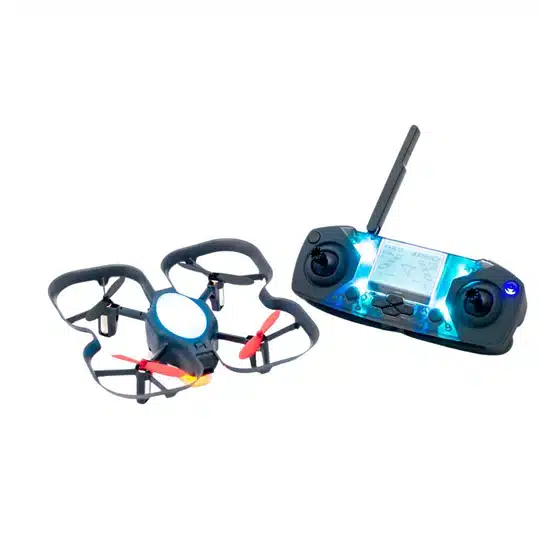
CoDrone EDU from Robolink is a programmable drone built for learning. Robolink’s CoDrone EDU page lists support for Blockly and Python, so students can start with drag-and-drop blocks and move on to typed code. It’s designed for coding lessons rather than aerial photos or video. The range also includes a portable drone cage, which gives classrooms a contained space for indoor flights.
For schools and clubs, the Education Drones category also lists DJI Tello EDU classroom packs and a CoDrone EDU classroom set. When buying for a group, compare the cost per student rather than the pack price.
A budget way into FPV
FPV, or first-person view, means flying through goggles that show a live feed from the drone’s camera. It’s fast, immersive and a different skill from flying a folding camera drone. It’s also where the best budget drones get harder to compare, because the aircraft is only part of the cost. Our FPV drones category shows every option in the range.
iFlight TP X5 HD BNF
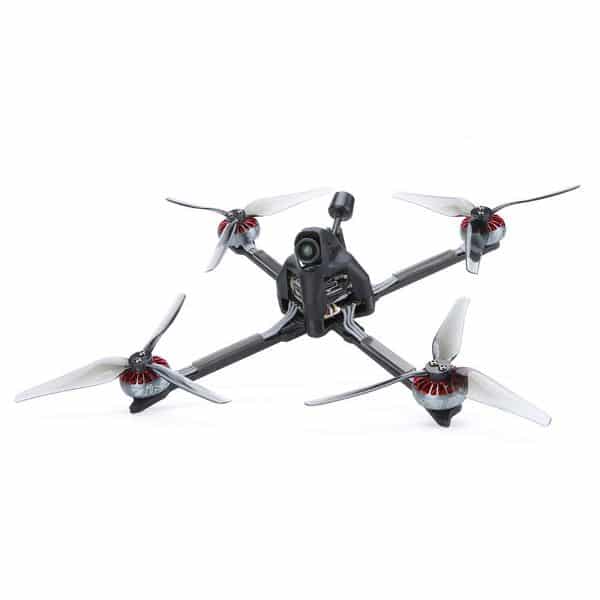
The iFlight TP X5 HD BNF is the FPV pick in our budget band, with a Caddx Nebula Nano digital HD camera system. BNF stands for bind-and-fly: the quad comes without a radio controller, so you bind your own compatible radio. You’ll also need compatible FPV goggles. If you already own both, it’s one of the best budget drones for getting into digital HD FPV.
If you’re starting from scratch, add a radio, goggles, batteries and a charger to the total. The DJI FPV Combo bundles the aircraft, goggles and controller, but it sits well above our budget band.
What you give up with the best budget drones
Spending less always means giving something up. Even the best budget drones share a few common limits:
- Smaller sensors: less detail and more noise once the light fades.
- Wind handling: light airframes get pushed around in gusty coastal or hilltop conditions.
- Fewer safety aids: some models skip obstacle sensing, so you rely on your own judgement.
- Shorter real flight times: quoted figures assume calm air and steady flying.
- Simpler video links: older Wi-Fi systems give shorter, less stable connections.
- Fewer advanced features: higher frame rates, flat colour profiles or subject tracking may be missing.
None of these are deal-breakers for a first drone. If camera quality is your main concern, our guide to choosing a drone with camera explains sensors, frame rates and gimbals in more depth.
Hidden costs: batteries, cases and spares
The price on the product page is only part of what you’ll spend. Before checkout, add up what you’ll need to fly regularly and keep the drone protected. For most of the best budget drones, that list looks like this:
- Spare batteries, or a Fly More Combo or kit that already includes them.
- A hard case, such as the Nanuk 910 Case for DJI Mini 2 or the Nanuk 915 Case for Autel Nano.
- Spare propellers, because the tips chip and wear over time.
- A microSD card, if your drone doesn’t come with one.
- A way to charge on trips, such as a car charger, power bank or portable power station.
You’ll find more in Accessories & Spares, which you can filter by category and price range. Cases in the Nanuk drone cases range are fitted to specific models, so your kit doesn’t shift around in transit. A fitted case is a smart buy for any of the best budget drones you plan to travel with.
Matching the best budget drones to the buyer
Here’s a quick way to match the best budget drones in this guide to the person who’ll fly them:
- Kids and young teens: the Airwood 4in1 for basic flying, or CoDrone EDU if coding is part of the plan.
- Travellers and hikers: the DJI Mini 2 or Autel EVO Nano, for 4K video in a small, light package.
- Nervous first-timers: the Autel EVO Nano or DJI Mini 3 Pro, for their obstacle sensing.
- Low-light shooters: the EVO Nano Plus or Mini 3 Pro, thanks to their larger sensors.
- Aspiring FPV pilots: the iFlight TP X5 HD BNF, if you already own a radio and goggles.
- Schools and clubs: CoDrone EDU and the education classroom packs.
Buying a gift? Think about who will fly it and where, then choose the option that suits them best. Budget drones built for filming and drones built for coding reward very different interests. A teenager who loves making videos will get more from a Mini 2, while a coding club needs the reverse.
Flying a budget drone in Australia
A lower price doesn’t change the rules. CASA’s standard operating conditions apply when you fly for fun, whatever the drone cost. In short:
- Fly no higher than 120 metres above ground level.
- Keep at least 30 metres away from other people.
- Keep the drone within your visual line of sight at all times.
- Fly only one drone at a time.
- Don’t fly over or above people, or in populous areas such as beaches, parks and sporting events.
- Stay away from emergency operations.
- Respect other people’s privacy.
Read the full list on the CASA drone rules page before your first flight. If you plan to fly for work or business, CASA has extra registration and accreditation requirements, so check them on the CASA site first. Whichever of the best budget drones you choose, the same safety rules apply on every flight.
Buying your budget drone from Drones Direct
Drones Direct is an online store at dronesdirect.com.au with more than 250 products. Every product can be added to the cart and bought through a secure checkout. Shipping is calculated at checkout from your delivery address, so you see the full cost before paying. Orders are sent straight to you.
To narrow things down, open the Drones Direct shop and filter by category, price range, in-stock or on-sale items, then sort the results. The On Sale section is worth a look too. If you have a question about any of the best budget drones here, the team is available through live chat before or after you buy. An account lets you see your orders and save addresses.
Best budget drones FAQ
Which budget drone suits a complete beginner?
Of the best budget drones here, the DJI Mini 2 is a strong pick for most adult beginners. It’s light, records 4K video on a 3-axis gimbal and uses DJI’s O2 transmission. If obstacle sensing matters, the Autel EVO Nano senses obstacles to the front, rear and below. Younger beginners may suit a simple starter drone like the Airwood 4in1.
How long do budget drone batteries last?
Makers quote maximum flight times measured in calm air at a steady speed. DJI quotes 31 minutes for the Mini 2 and 34 minutes for the Mini 3 Pro, while Autel quotes 28 minutes for the EVO Nano. Real flights with hovering, climbing and wind run shorter, so it’s worth budgeting for at least one spare battery.
Is a budget drone good enough for social media video?
Yes, for most social posts. The Mini 2 and EVO Nano both record 4K, which leaves room to crop a vertical clip from a widescreen frame. The Mini 3 Pro adds 4K at up to 60fps and a larger sensor for smoother motion and cleaner footage in softer light. Good light and steady flying matter as much as the model.
The best budget drones are the ones that match how you’ll actually fly. Start with the shortlist above, compare the product pages and set money aside for batteries and a case. For a wider look at the brand behind several of these picks, read our DJI drones guide, or browse every camera and FPV drone in the range.