A mini drone packs a capable camera, GPS and smart flight features into a frame that folds down to the size of a phone. For most people, a mini drone is the easiest way into aerial photography: it’s light to carry, simple to fly and covered by the most relaxed rules in Australia.
This guide explains what counts as a mini drone, why the 250 g line matters, which specs actually make a difference, and how the small drones in the Drones Direct range compare. If you’re deciding between a mini drone and something bigger, you’ll know which way to go by the end.
What is a mini drone?
There’s no single official definition, but in everyday use a mini drone is a small, lightweight drone, usually one that weighs 250 g or less. Most modern mini drone designs fold up, carry a stabilised camera on a gimbal and use GPS to hover in place.
That’s different from a toy micro drone. A palm-sized toy might weigh 30 g and drift with every breeze, while a camera-equipped mini drone holds its position, returns home automatically and records sharp 4K video.
Mini drone vs micro drone vs full-size drone
| Type | Typical weight | Camera | Best for |
|---|---|---|---|
| Micro or toy drone | Under 100 g | Basic or none | Indoor fun and first practice |
| Mini drone | Around 249 g | Stabilised 4K | Travel, holidays, content and learning |
| Mid-size drone | 500 g to 1 kg | Larger sensors | Serious photography and video |
| Professional drone | 1 kg and up | Interchangeable or zoom | Film, survey and inspection work |
Why the 250 g weight matters
The 249 g figure you see on so many spec sheets isn’t an accident. Manufacturers design each mini drone to slip under 250 g because that weight unlocks the lightest regulatory treatment in many countries, including Australia.
Under CASA’s rules, a drone of 250 g or less is a micro remotely piloted aircraft. For recreational flying, a mini drone at this weight can also be flown within 5.5 km of a controlled aerodrome, as long as you stay clear of the approach and departure paths and follow the other standard rules.
Lighter weight also means less energy in a collision, smaller batteries to pack and less fuss at the airport. It’s a big part of why small drones are the default recommendation for beginners and travellers.
7 reasons a mini drone is worth buying
1. It goes everywhere
A folded mini drone fits in a jacket pocket or a small bag. That means it actually comes on the hike, the road trip or the beach holiday instead of staying at home.
2. The simplest rules to fly under
As covered above, a sub-250 g drone sits in the most relaxed weight class. You still need to follow every standard safety rule, but there’s less to think about than with heavier aircraft.
3. It’s easy to learn on
GPS hovering, one-tap take-off and automatic return-to-home make modern small drones very forgiving. Beginners can focus on framing shots rather than fighting the controls.
4. Cameras punch above their weight
Today’s best mini drone cameras shoot 4K video, and some offer large sensors and HDR. For social media, holiday films and real estate snaps, the results are often all you need.
5. Quieter and less intrusive
A small drone is less noisy than a larger aircraft. That makes it more pleasant for you and for anyone nearby, which helps keep flying spots open.
6. Lower running costs
Batteries, propellers and cases for small drones generally cost less than for bigger models. Crash repairs tend to be cheaper too.
7. Room to grow
Many people start with a mini drone and never feel the need to upgrade. Others use it to learn and then step up to a larger camera drone once they know what they want.
Key specs to compare in a mini drone
Spec sheets can be overwhelming. These are the numbers that make the biggest real-world difference when choosing a mini drone.
- Sensor size. Bigger sensors capture more light, which means cleaner footage at sunrise, sunset and indoors. A 1/1.3-inch sensor is a big step up from 1/2.3-inch.
- Video resolution and frame rate. 4K at 30 fps suits most people. 4K at 60 fps gives smoother motion and room for slow motion.
- Flight time. Quoted times are measured in ideal conditions. Expect real flights to be noticeably shorter, especially in wind.
- Obstacle sensing. Sensors that detect objects ahead, behind or below add a valuable safety net.
- Transmission. A strong, stable video link matters more than headline range, because you must keep the drone within sight anyway.
- Wind resistance. A light airframe is more affected by wind, so check the rated wind resistance if you fly on the coast.
The best mini drone options at Drones Direct
Every model below weighs 249 g in its standard configuration. Each one suits a slightly different pilot, so match the strengths to how you’ll fly.
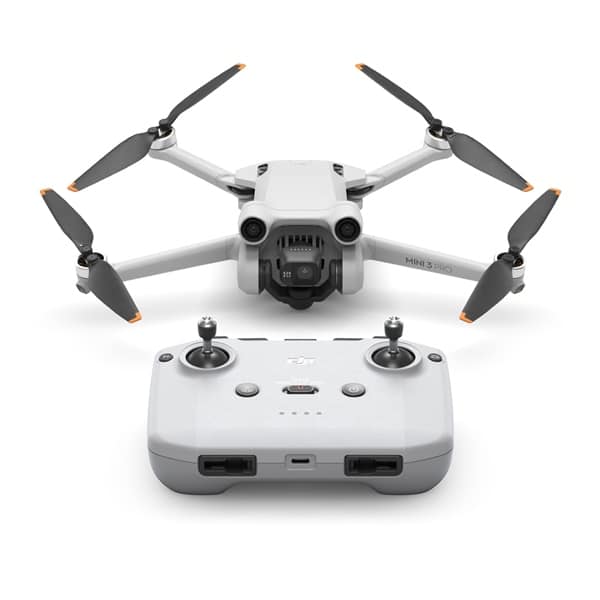
DJI Mini 3 Pro
The DJI Mini 3 Pro is the most capable mini drone in our range. It pairs a 1/1.3-inch sensor with 4K/60fps video, tri-directional obstacle sensing and true vertical shooting for social media.
DJI rates its standard battery at up to 34 minutes. For longer days out, the Fly More Kit Plus adds higher-capacity batteries, but note they take the drone over 250 g.
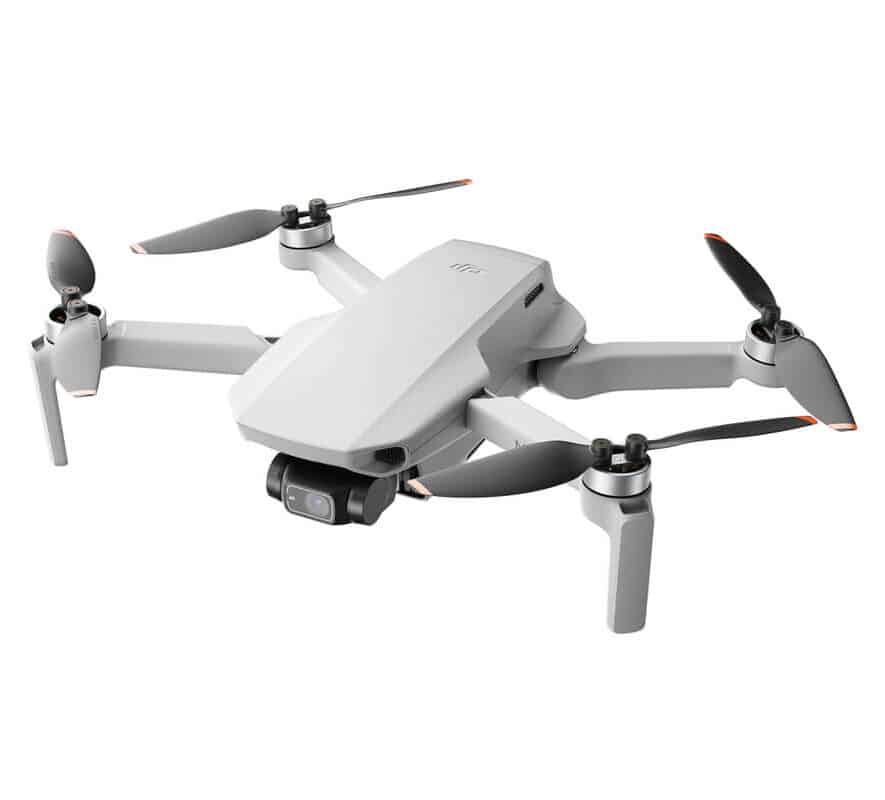
DJI Mini 2 Fly More Combo
The DJI Mini 2 Fly More Combo is a great-value mini drone with 4K/30fps video and up to 31 minutes of rated flight time per battery. The combo includes three batteries and a charging hub, so you can keep flying all afternoon.
If you only need the drone itself, the standalone DJI Mini 2 is also available.
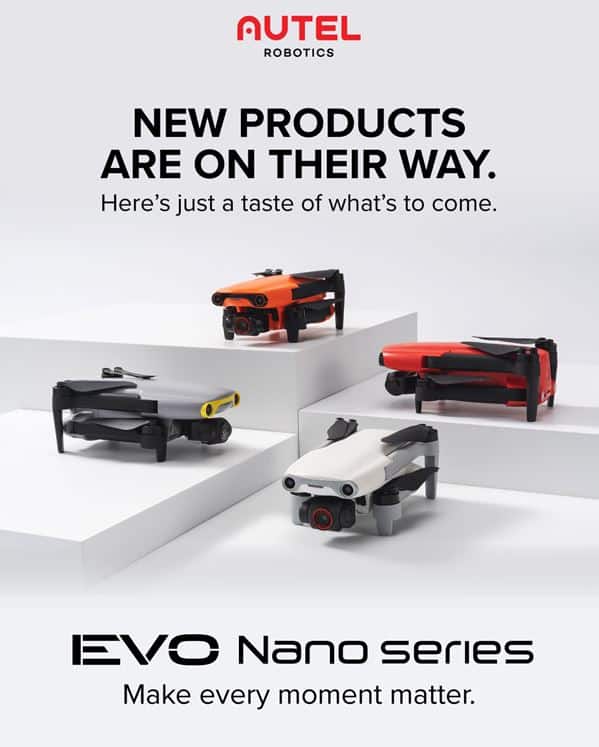
Autel EVO Nano Plus
The Autel EVO Nano Plus is a strong alternative with a large 1/1.28-inch sensor and three-way obstacle avoidance. It’s a good pick if you want something other than DJI or prioritise low-light performance.
The Autel EVO Nano offers the same compact design with a smaller 48 MP sensor.
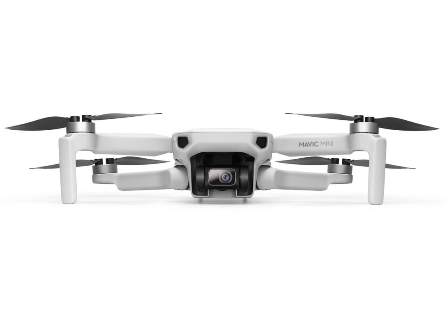
DJI Mavic Mini
The DJI Mavic Mini was the model that made the 249 g mini drone popular. It records 2.7K video and is rated for up to 30 minutes, making it a simple, budget-friendly way to start. A Fly More Combo is also available.
Mini drone comparison table
| Model | Weight | Sensor | Max video | Rated flight time |
|---|---|---|---|---|
| DJI Mini 3 Pro | 249 g | 1/1.3-inch | 4K/60fps | Up to 34 min |
| DJI Mini 2 | 249 g | 1/2.3-inch | 4K/30fps | Up to 31 min |
| Autel EVO Nano Plus | 249 g | 1/1.28-inch | 4K | Up to 28 min |
| Autel EVO Nano | 249 g | 1/2-inch | 4K | Up to 28 min |
| DJI Mavic Mini | 249 g | 1/2.3-inch | 2.7K | Up to 30 min |
Figures are manufacturer specifications measured in ideal conditions.
Mini drone for coding and classrooms
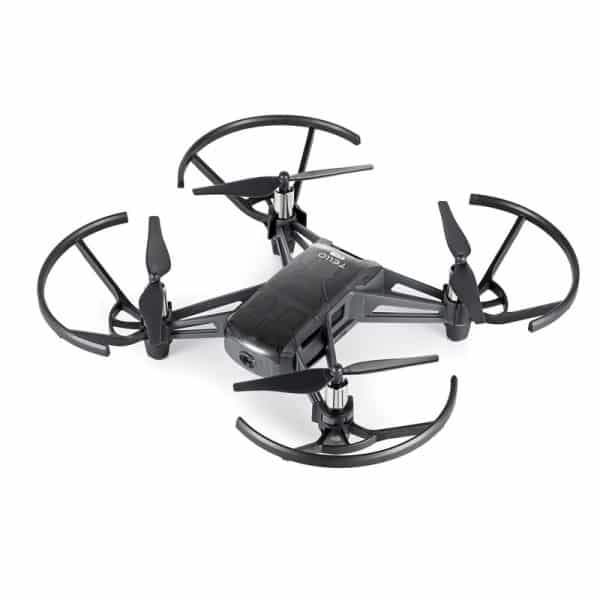
Not every mini drone is about photography. Tiny programmable drones such as the DJI Tello EDU weigh around 80 g and are built for coding lessons with Scratch, Python and Swift.
Our Tello Education Classroom Packs bundle several drones for schools, while the CoDrone EDU is another popular classroom choice. If you’re buying for younger pilots, our guide to choosing a drone for kids goes deeper.
DJI or Autel: which brand of small drone?
Most shoppers end up choosing between DJI and Autel. Both make excellent sub-250 g drones, and the right pick comes down to priorities rather than a clear winner.
| Consideration | DJI | Autel |
|---|---|---|
| Range of models | Widest choice of small drones and accessories | Smaller, focused line-up |
| Apps and features | Polished app with many automated shots | Straightforward app with core smart modes |
| Low-light sensor | Mini 3 Pro uses a 1/1.3-inch sensor | EVO Nano Plus uses a 1/1.28-inch RYYB sensor |
| Obstacle sensing | Varies by model | Three-way sensing on the EVO Nano series |
| Spares availability | Very widely available | Available through specialist retailers |
If you already own DJI gear or want the biggest choice of add-ons, DJI is the easy option. If you want strong low-light performance or simply prefer an alternative ecosystem, Autel is well worth a look.
Best camera settings for small drones
Getting great footage is less about the drone and more about a few smart settings. These starting points work for most sub-250 g cameras.
- Resolution: record in 4K where possible, even for social media. It gives room to crop and stabilise later.
- Frame rate: use 24 or 25 fps for a cinematic look, 30 fps for general use and 60 fps when you want slow motion.
- Shutter speed: aim for roughly double your frame rate, such as 1/50 s at 25 fps. ND filters make this possible in bright sun.
- Colour profile: a flat or D-Cinelike profile keeps more detail for editing, while the normal profile looks great straight out of the camera.
- Photos: shoot RAW (DNG) as well as JPEG so you can recover highlights and shadows.
Keep movements slow and smooth. Gentle stick inputs, steady climbs and slow orbits look far more professional than fast, jerky flying.
Travelling with a small drone
Compact size is a huge advantage when you travel, but there are a few things to plan for before you head to the airport.
- Carry batteries in your cabin bag. Airlines require spare lithium batteries to travel in carry-on luggage, not checked bags. Check your airline’s limits before you fly.
- Protect the terminals. Keep each battery in its own pouch or bag so the contacts can’t touch metal objects.
- Pack a hard case. A fitted case protects the gimbal and props from rough handling.
- Research local rules. Rules differ between countries, states and even individual parks, so check before you fly anywhere new.
- Download maps offline. Remote locations may have no mobile coverage, so cache maps in the app beforehand.
National parks deserve a special mention. Many parks restrict or ban drone flying, so always check the rules for the park you plan to visit.
Limits of a mini drone
Small drones are brilliant, but they aren’t perfect for every job. Knowing the trade-offs helps you avoid buying the wrong tool.
- Wind. A light airframe gets pushed around more in strong gusts, especially at height or near the coast.
- Sensor size. Even the best mini drone can’t match the low-light quality of a larger 1-inch or Four Thirds sensor.
- Payloads. You can’t carry fishing bait, spotlights or survey sensors. For that, look at waterproof and fishing drones or enterprise drones.
- Battery weight. Larger “Plus” batteries extend flight time but push some models over 250 g.
If those limits matter, a mid-size camera drone such as the DJI Air 2S with its 1-inch sensor may suit you better.
Common mistakes new pilots make
Most crashes and lost drones come down to a handful of avoidable errors. Knowing them in advance will save you money and stress.
- Taking off before GPS is locked. Without a home point, return-to-home can’t bring the drone back. Wait for the app to confirm before lifting off.
- Ignoring the battery warning. Wind on the way back can drain a battery fast. Start heading home at around 30 per cent, not when the alarm sounds.
- Flying backwards blind. Many small drones have no rear sensors. Check the space behind before reversing, or turn and fly forwards instead.
- Forgetting about trees. Return-to-home climbs to a set height and flies straight back. If that height is lower than the trees in the way, it can clip a branch.
- Flying beyond sight. It’s illegal and it’s how drones get lost. If you can’t see it clearly, bring it closer.
- Launching from a moving vehicle or boat. Home points become unreliable. Launch and land from stable ground.
Build a short pre-flight routine and stick to it. A two-minute check before every flight prevents most of these problems.
Flying a mini drone safely in Australia
Light weight doesn’t mean no rules: CASA’s standard operating conditions still apply. Recreational pilots must follow these rules every time they fly.
- Stay at or below 120 m above ground level.
- Keep the drone within visual line of sight.
- Keep at least 30 m from people, and never fly over them.
- Fly during the day only, and one drone at a time.
- Avoid emergency operations and populous areas.
If you fly for business, for example selling photos or filming for clients, extra rules apply even to a 249 g drone, including registration and operator accreditation. Check the latest on CASA’s drone rules before you fly.
Tips to get the most from a mini drone
- Calibrate the compass when the app asks, especially at a new location.
- Wait for a strong GPS lock before take-off so return-to-home works properly.
- Set a sensible return-to-home height that clears nearby trees and buildings.
- Watch the wind warnings in the app and land early if the drone struggles.
- Carry spare batteries and keep them at room temperature in cold weather.
- Shoot in the golden hour after sunrise or before sunset for the best footage.
Accessories worth adding
The right extras turn a small drone into a complete kit. Consider spare batteries, a charging hub, ND filters for smooth video in bright light, and a protective case.
Our range includes cases such as the Nanuk 910 for DJI Mini 2 and the Nanuk 915 for DJI Mini 3 Pro. Browse more in accessories and spares.
Mini drone FAQ
What is the best mini drone for beginners?
The DJI Mini 2 is an easy, affordable mini drone for beginners, while the DJI Mini 3 Pro suits those who want a better camera and obstacle sensing from day one.
Do I need to register a mini drone in Australia?
Not if you only fly for fun. Recreational flyers currently don’t need to register. If you fly a mini drone for business, registration and operator accreditation are required regardless of weight.
How far can a mini drone fly?
Transmission ranges are often quoted in kilometres, but in Australia you must keep any drone within visual line of sight. In practice, that limits how far you can legally fly.
Can a mini drone fly in the wind?
Yes, within limits. Most small camera drones handle light to moderate wind, but strong gusts can push them around. Check the rated wind resistance and land if the app warns you.
Is a mini drone good enough for professional work?
For social media, small real estate jobs and simple inspections, a quality mini drone can be enough. For high-end film, survey or thermal work, larger professional drones are the better tool.
How long does a mini drone battery last?
Rated flight times range from about 28 to 34 minutes for the models above. Real flights are shorter, so most pilots carry two or three batteries for a session.
Can I fly a mini drone at night?
Not under the standard recreational rules. CASA requires recreational pilots to fly during the day only, from sunrise to sunset. Night flying needs specific approval.
Is a mini drone safe to fly near the beach?
It can be, as long as you stay at least 30 m from people, avoid flying over swimmers and watch for strong sea breezes. Busy beaches count as populous areas, so pick a quiet stretch and a calm day. Salt spray and sand can also damage motors, so wipe the drone down afterwards.
Which mini drone has the longest flight time?
Of the models above, the DJI Mini 3 Pro has the longest rated flight time with its standard battery, at up to 34 minutes. The optional Plus batteries extend that further but push the drone over 250 g.
Find your mini drone at Drones Direct
A mini drone gives you a capable camera, smart flight features and the simplest rules in a package that goes anywhere. Choose the DJI Mini 3 Pro for the best image quality, the Mini 2 for value, or the Autel EVO Nano Plus for a strong alternative.
Before you pay, run through our drone buying checklist, then compare models in our camera drones range or browse the full drone shop.